Bigfoot Sightings Map —Decoding Bigfoot's Trail Using Data

Bigfoot Sightings Map —Decoding Bigfoot's Trail Using Data

Decoding Bigfoot's Trail: How a Bigfoot Sightings Map Can Predict Bigfoots Whereabouts

Where is Bigfoot? By analyzing a comprehensive Bigfoot Sighting Map, you can see where sightings and concentrated and better predict Bigfoot’s movements and up-to-date location.


Bigfoot Sighting Map Courtesy of the Bigfoot Mapping Project (click to enlarge). Screenshot from www.bigfootmap.com.


Today’s post will focus on tracking the elusive Bigfoot, a creature that has managed to keep humanity on our toes for hundreds of years. And our tool for tracking the movements and potential locations of Bigfoot will be a detailed and comprehensive map of bigfoot sightings that will allow you to visualize and potentially predict Bigfoot's next move.

The legendary creature known as Bigfoot has been sighted in many parts of North America, leading to numerous theories about his movement patterns and general whereabouts. Bigfoot’s location has been an ongoing mystery that continues to baffle scientists and enthusiasts alike as it remains unclear whether or not Bigfoot is continuously on the move or if there are multiple Bigfoot-like creatures scattered around North America.

Given the mystery surrounding Bigfoot and his whereabouts, looking at a comprehensive bigfoot sighting map is great way to make educated and scientific predictions and conclusions about Bigfoot, his movements, and his location at any given time.

Bigfoot Sightings Map: Is Bigfoot a migratory creature? Does he stay in one place or is he nomadic? Is there more than one Bigfoot? Photo by Ayako on Unsplash

A Bigfoot sightings map is a two-dimensional grid that depicts all of the landmass of North America and has points plotted at all of the geographical locations where a Bigfoot sighting has been reported. Every plotted point represents one reported Bigfoot sighting. And, by compiling all of these sightings on a map, you can use the data to see where sightings are concentrated and also track/predict Bigfoot’s movement patterns.

Why is the Bigfoot sightngs map such a useful tool? From a scientific and mathematical standpoint, patterns often hint at reliability and predictability, and this is where any serious analysis of determining Bigfoot’s whereabouts should begin.

Analyzing a map of Bigfoot sightings can give you important and incredibly useful insights into Bigfoot's preferred geological living environment, potential movement patterns, and, most importantly, his current location.

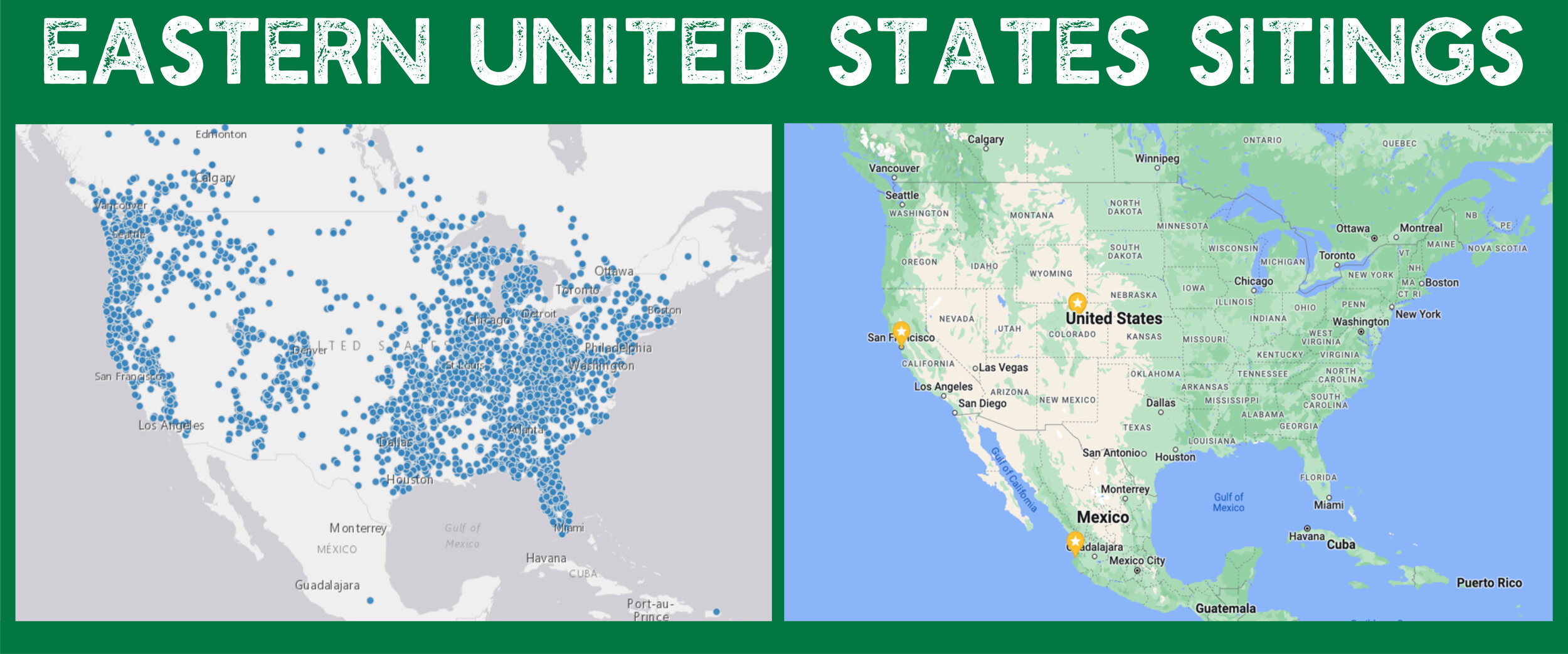
Bigfoot Sighting Map: Concentrated sightngs in the Pacific Northwest

Additionally, the sightings map can help you to determine if there are certain geological features favored by Bigfoot. For example, does he prefer dense forests over open plains? Does he prefer to be near major water sources, cave systems, weather conditions, etc.? Does Bigfoot tend to appear during specific seasons or times of day?

By better understanding these questions and there potential answers, you have a much better chance of determining Bigfoot’s current location at any given point in time.

Many Bigfoot sightings have been reported in the dense, remote forests of the Pacific Northwest regions of the United States and Canada. This pattern could suggest that Bigfoot prefers forested areas far from human habitation, perhaps for shelter or food resources. The more we understand these patterns, the better we can predict where he might show up next.


Image: Mashup Math MJ


Of course, analyzing a Bigfoot sighting map isn't just about connecting dots or plotting points on a grid. The map itself is only a tool and it requires an understanding of the geographical, climatic, and ecological factors at play. Are there abundant food sources in the areas of reported sightings? What's the population density like? Answers to such questions deepen our understanding of Bigfoot's behavior and raise new questions as well.

In the case of being a Bigfoot detective and using science and data to track the elusive being, we are not merely passive observers, but active participants attempting to unravel the mysteries of Bigfoot's existence. And, in doing so, we contribute to the larger discourse on Bigfoot and his alleged movements.
Bigfoot Sighting Map: Is Bigfoot a migratory creature? Are there multiple Bigfoots?

As organizations continue to collect and analyze sightings data, a Bigfoot sighting map becomes an ever-evolving tool, gaining in accuracy and detail. It's a testament to the collective efforts and scientific curiosity of the Bigfoot community.

However, it is also important to note that, while it's easy to get caught up in the thrill of the chase, it's important to approach each reported sighting with a healthy dose of skepticism. Always consider the source and the circumstances of the sighting. Not every footprint in the mud belongs to Bigfoot.

If you are looking for an interactive and comprehensive Bigfoot map that is constantly updated, we recommend the Bigfoot Mapping Project’s website, where you can see up-to-date Bigfoot sightings, analyze geographical features such as elevation, and report a sighting of your own!
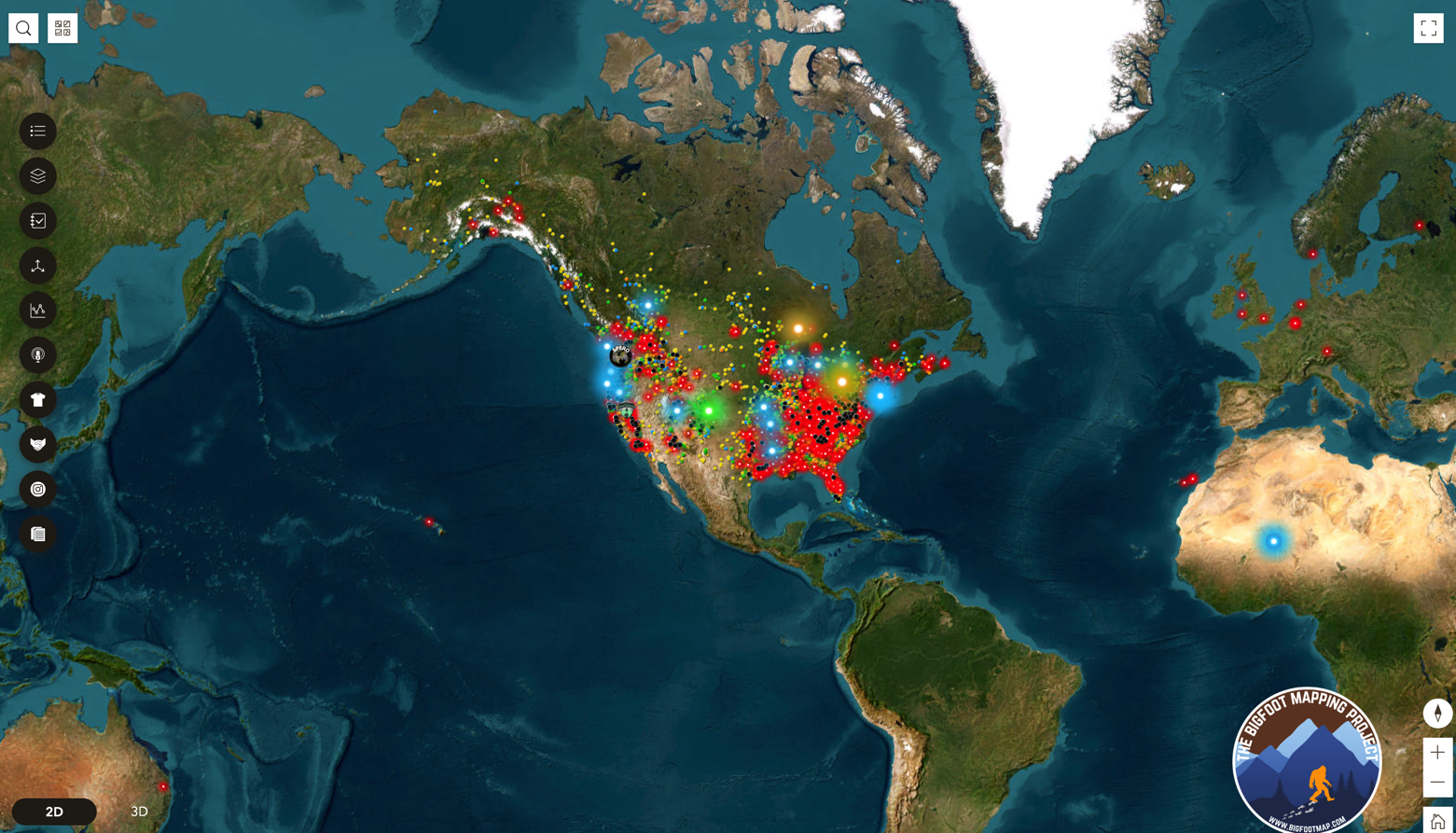
Source: The Bigfoot Mapping Project via https://www.bigfootmap.com

More Free Resources You Will Love:
Search Tags: bigfoot, bigfoot sightings map, bigfoot sitghing map, bigfoot sighting map, map of bigfoot sightings, bigfoot map, bigfoot on google maps

The Paper Airplane Game: Fun Project for Students

The Paper Airplane Game: Fun Project for Students

The Ultimate Paper Airplane Project

Research, Experiment, Optimize, and Test Your Design to Win the Paper Airplane Game


What is the paper airplane game? The paper airplane game is a project involving math and physics where students attempt to create a paper airplane that excels in distance, accuracy, and hang time. (Image: Mashup Math FP)


The Paper Airplane Game: The Ultimate Paper Airplane Math Project is a hands-on and fun exploration of the mathematics and physics behind designing and creating a paper airplane that can travel long distances, fly accurately, and stay in the air as long as possible.

The paper airplane game is great for all ages and is a popular math project activity for elementary and middle school students. The only resources required are paper, scissors, a stopwatch, measuring tape, and having access to an open space (indoor or outdoor) where students can fly their paper airplanes.

Here is how the project works:

Paper Airplane Game Stage 1: Research

The very first stage of the paper airplane game involves researching the physics and mathematics behind what allows airplanes to take flight. During this stage, students are exposed to key concepts including lift, drag, thrust, and the impact of weight.

This stage is meant to spark student interest and inspire their designs. We recommend showing the following 5-minute TED-Ed video How Do Airplanes Actually Fly?


Paper Airplane Game Stage 2: Experiment

The second stage of the paper airplane game is experimenting. During this phase, students are given the freedom to play with different styles and designs to make paper airplanes. Students have the option to follow classic designs or to create their own unique designs and then use trial-and-error to test how different shapes and folds affect how a paper airplane travels.


Paper Airplane Game Stage 3: Collect Data

During the third stage, students are tasked with collecting data about their paper airplane designs. Using a stopwatch and measuring tape, students can track data about how far their plane traveled, how long it stayed in the air, and how accuratly it flies when being thrown at a target.

Paper Airplane Game Stage 4: Data Analysis

Once enough data has been collected, students are ready to analyze their results to make conclusions about the viability of their designs. Students should be encouraged to use math formulas and to make calculations to draw meaningful conclusions and to determine which design is best for the final competition.

Paper Airplane Game Stage 5: Optimize Your Design

Based on students analysis of their collected data, they should be given one final opportunity to optimize their paper airplane designs to maximize their plans distance, accuracy, and air time. Students may want to combine the best features from multiple designs into one final product. Students can also practice throwing their final design and see how different throwing techniques affect the flight patterns.


Image: Mashup Math FP


Paper Airplane Game Stage 6: Compete

Finally, students can have their final paper airplane designs compete against each other in three categories:

  • farthest distance traveled

  • accuracy (how close a thrown plane can get to hitting a given target)

  • air time (which plane can stay in the air the longest before hitting the ground)

Students can also present their final designs to the class and explain what they learned by going through the research, experimenting, data collection and analysis, and optimization phases.


More Free Resources You Will Love:
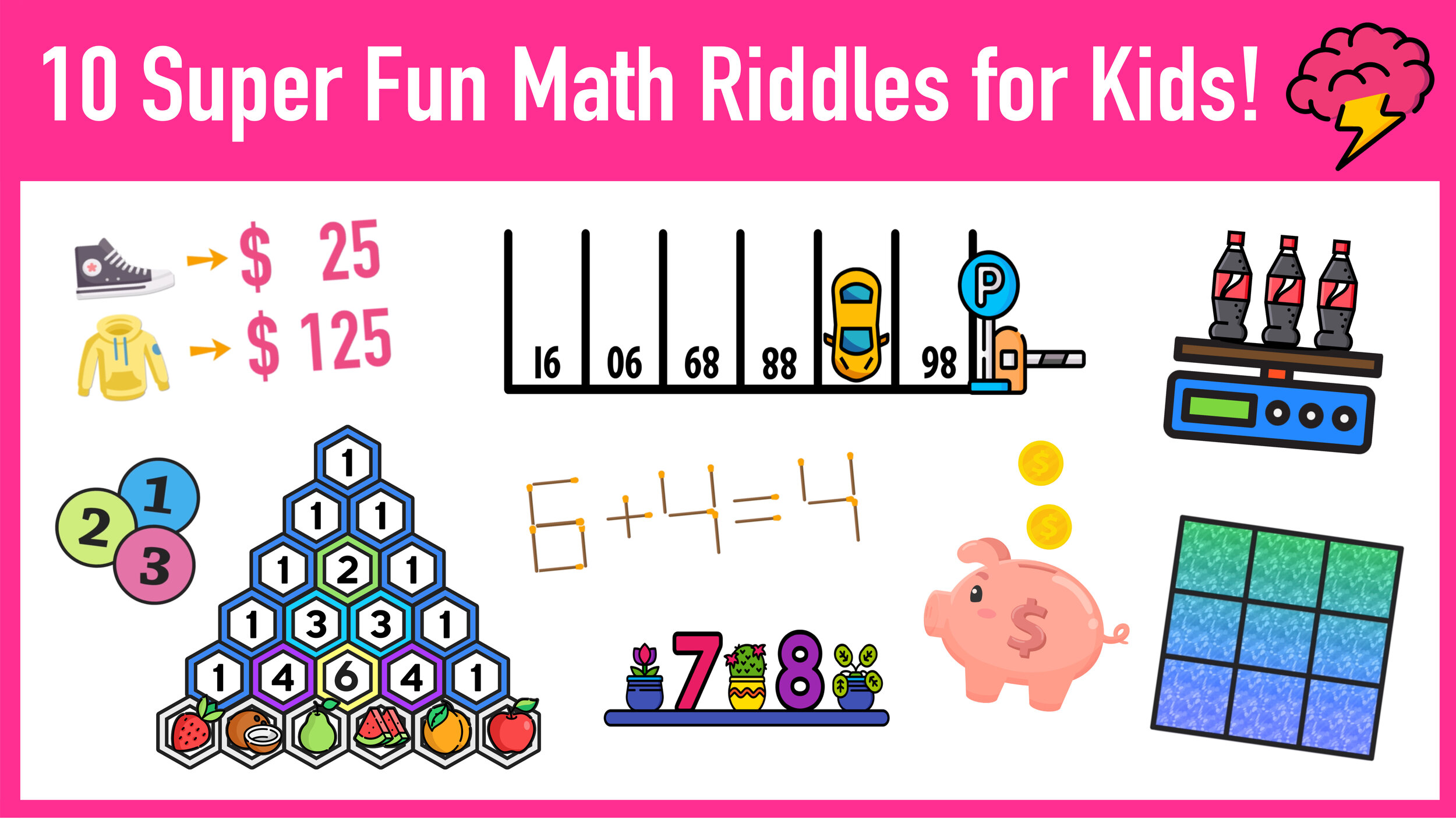
Why Am I So Bad at Math? (And How to Get Better)

If you are wondering, why am I so bad at math? The fault is likely due to you having a fixed mindset for learning, which is often a product of being negatively affected by harmful misconceptions about your ability to learn math.


Division Word Problems—Free Worksheets for Grades 3-5

Comment

Division Word Problems—Free Worksheets for Grades 3-5

Division Word Problems—Free PDF Worksheets

Do your students need extra practice working on division word problems?

 
Division Word Problems Grade 3, Division Word Problems Grade 4, and Division Word Problems Grade 5

Free Division Word Problems Worksheets (Printable) for 3rd graders, 4th graders, and 5th graders.


Once your elementary math students learn how to perform division and become more comfortable with dividing numbers, the next step is to have them extend their understanding of division to solving real-world problems. By giving your students opportunities to work on word problems that require the use of division to find a solution, they must engage in higher-level thinking that will help them to not only better understand how to divide, but become better mathematical problem solvers as well.

If you are looking for free division word problems to share with your students in grades 3-5, then you will love the our free collection of Division Word Problems. Below, you will find previews and download links for 12 different division word problems worksheets (with answer keys included) that are divided into three categories based on difficulty levels:

Each worksheet is available as a PDF download that is printable and also easy to share on online learning platforms like Google Classroom.

To download any of the division word problems worksheets below, simply click on text link to access the pdf file, which you can print and/or save to your device to use with your students however you see fit. Enjoy!

(Do you want free K-8 math resources and activities in your inbox every week? Click here to sign up for our free math education email newsletter)


Division Word Problems: Basic

Suggested Grade Level(s): Grade 3, Grade 4

The following division word problems focus on beginner/basic applications of division to solve word problems.

Click any of the preview image boxes below to preview the word problems and click on the blue text link below any of the images to download the corresponding pdf worksheet and answer key.


Division Word Problems: Intermediate

Suggested Grade Level(s): Grade 3, Grade 4, Grade 5

The following division word problems focus on intermediate applications of division to solve word problems.

Click any of the preview image boxes below to preview the word problems and click on the blue text link below any of the images to download the corresponding pdf worksheet and answer key.


Do you want more free K-8 math activities in your inbox every week?


Long Division Word Problems: Advanced

Suggested Grade Level(s): Grade 3, Grade 4, Grade 5

The following division word problems focus on advanced applications of division (and long division) to solve word problems.

Click any of the preview image boxes below to preview the word problems and click on the blue text link below any of the images to download the corresponding pdf worksheet and answer key.


Tips for Solving Division Word Problems

Our free division word problems grade 4 and division word problems grade 5 worksheets allow students to practice and apply their understanding of division to real-world scenarios. However, even if your students have a strong understanding of division and long division, they may struggle to solve word problems since they require additional skills such as identifying key information, picking up on context clues, and answering in complete sentences.

If your students struggle with word problems, here are some helpful tips for being successful:

  • Always read the problem carefully: The first step to solving any of the division word problems is to carefully read the question, identify key information, and know exactly what the question is asking. It is helpful to look for and even highlight key words and phrases related to division such as split equally, divided evenly, left over, etc.

  • Draw diagrams to help you: Many students will benefit from using diagrams as visualize aids for understanding a given problem and how to solve it. For example, if a problem involves 24 apples divided evenly amongst 3 people, you could draw 24 circles (each representing one apple) and then divide that group into 3 equal parts to see how many apples are in each group.

  • Always ask yourself “what is this question asking me to do?”: By identifying exactly what a question is asking you to do, you will have a better idea of what the answer will look like and how you can find it.

  • Write your answer using complete sentences and double-check that it makes sense: Once you've solved a division word problem, write your final answer in a complete sentence that makes sense in the context of the problem. For example, if a question is about equally distributing 100 cupcakes between four people, it wouldn’t make sense if you concluded that each person receives 75 cupcakes (meaning that you should go back and try the problem again).

(Do you want free K-8 math resources and activities in your inbox every week? Click here to sign up for our free math education email newsletter)

More Math Education Resources You Will Love:


Search Tags: division word problems, division word problems grade 4, division word problems grade 3, 3rd grade division word problems, division word problems for 3rd graders, division word problems grade 5, long division word problems, division word problem, division word problems for 4th graders, division word problems for 5th graders, 4th grade division word problems, division word problems 4th grade, long division worded problems

Comment

What is the Easiest Math in College?

What is the Easiest Math in College?

What is the Easiest Math in College?

How to Choose College Math Courses That Work for You


What is the easiest math in college? While the answer depends on your skill level and career interests, there are several college math courses that are manageable and generally easy for students who want to avoid highly challenging courses like calculus.

(Image: Mashup Math via Getty)


Choosing college math classes that are appropriately challenging for you can be tricky. On one hand, you never want to put yourself in a math class that is extremely difficult where you are not in a position to be successful, which only wastes your time and money. On the other hand, it may not be valuable for you to take a college math class that is too easy or that focuses on material that you have mastered or is not useful to your potential career path.

It can be tricky to enroll in math classes that are a good fit for you, which is why so many students wonder what is the easiest math in college? If you find yourself asking this question as you begin to make your schedule, then continue reading for some solid advice and tips that will help you moving forward.

For starters, you are not alone. Many college students struggle with mathematics and want to enroll in courses that are manageable and not overly challenging. But determining the easiest math in college is not a simple determination, as the word “easiest" typically means something different for every student. However, in this post, we will explore some great options for students who are looking for a math class that is considered easy (i.e. less challenging) along with some helpful tips on how to pick math courses that will be a good fit for you.

Now, let's talk about what is meant by the easiest math in college. For some, easy math means courses that are appropriately challenging based on your individual skill level. These “Goldilocks” math classes are not too hard or too easy, instead, they are just right. For others, easy math means classes that require very little effort and often are not very challenging or interesting. Before moving forward, you will have to determine which definition of “easy math” applies to you.

Making this distinction is important because, just because a math class is considered easy, it doesn’t necessarily mean that the course will be a good fit for you and your potential career path. As a student, it is in your best interest to select math courses that are not only manageable, but also appropriately challenging, interesting, and engaging.

With this in mind, here are a few options for math classes that are generally considered to be easy and manageable for college students:


Statistics courses can be more manageable for some students because the material is less theoretical and more applied than more complicated math courses such as differential equations. Photo by Sam Balye on Unsplash


What is the Easiest Math Class in College?

  • Statistics: Statistics is a branch of mathematics dealing with the collection, analysis, and interpretation of numerical data. Statistics is often used in career fields including business, finance, research, and healthcare. Statistics courses can be more manageable for some students because the material is less theoretical and more applied than more complicated math courses such as differential equations.

  • Finite Math: Finite math refers to a variety of math courses that do not involve calculus. These types of course typically cover topics such as linear algebra and probability. This type of math is often used in business and the social sciences. Finite math classes are often a good option for students who want to avoid calculus.

  • Business Math: Business math courses focus on all of the practical applications of mathematics in business, such as finances, forecasting, and management. Business math topics often include percentages, interest, and applied algebra. Such courses can be a great option for students who are interested in business careers, but want to avoid abstract math courses that are overly challenging.

  • Applied Math: Also known as “Real-World Math,” applied math courses are designed to give students experience with math skills that are applicable to real life. These courses include topics such as logic, probability, and personal finance. Applied math courses are a good option for students who want to fulfill a math requirement, but are not interested in further pursuing any advanced math courses.


What is the easiest math class in college? The math classes you choose will be based on your personal goals and career aspirations. Photo by Desola Lanre-Ologun on Unsplash


What is the Easiest Math in College: Tips and Pointers

Now that you have a few good options for math courses that are generally considered to be easy, we can take a look a few pointers for college students on how to select math courses that will be a good fit for them:

  • Work with your advisor: Your academic advisor or guidance counselor can be a great resource for guiding you when choosing a math course that is appropriately challenging for your skill level and personal interests. Advisors can provide guidance on which math courses are requirements for your desired major and which courses could potentially be a good fit for you based on your interests.

  • Do your research: Before you enroll in any math class, it is important to do some research to find out what the course covers and what the course requirements are. This information can often be found in your school’s course catalog or website. This information will give you a better idea of whether or not a math class is a good fit for you and your interests.

  • Look for Reviews: Whenever possible, read course reviews online or talk to other students who have already taken the course. This type of feedback will give you insight into the what you will learn, the course’s difficulty level, and the teaching style of the professor.

  • Be Goal-Oriented: Choosing courses is often based on whatever major or minor you are pursuing, many of which include required math courses. Whenever you are choosing a math class to enroll in, think about why you are taking the course and what you hope to gain from being enrolled. You may simply be looking to fulfill a requirement, but you may also be interested in pursuing a career that requires strong math skills and you want to be more well-rounded.

  • Be Honest: Finally, always be honest with yourself and your skill level and comfort with mathematics. It’s okay to avoid math classes that may be too challenging for you or way too high above your skill level, but it’s never recommended to set your bar too low and choose math classes only because they are considered easy. Rather, if a math class that may be a requirement for a career path that interests you seems too challenging at the moment, talk to an advisor to find prerequisite courses that will help you develop your skills to a point where you are able to take on more challenging courses.

More Free Resources You Will Love:

Why Am I So Bad at Math? (And How to Get Better)

If you are wondering, why am I so bad at math? The fault is likely due to you having a fixed mindset for learning, which is often a product of being negatively affected by harmful misconceptions about your ability to learn math.


How to Engage Students in Math Lessons—5 Ideas

How to Engage Students in Math Lessons—5 Ideas

How to Engage Students in Math Lessons

5 Effective Ideas for How to Engage Students in Math Lessons


How to Engage Students in Math Lessons: Engagement in math starts with making the subject more interesting, relevant, and approachable for your students.

(Image: Mashup Math via Getty)


When students have negative attitudes about mathematics and its relevance to real life, they can quickly become disinterested in the subject, which often leads to disengagement and apathy in the classroom. As a teacher, you can flip the script on students’ mindset for math and its usefulness by utilizing strategies that allow them to experience math in a way that is both interesting and engaging. If you are looking for effective strategies for engaging your math students, below you will find five great ideas for making your upcoming lessons enjoyable and captivating for students at any grade level.

(Do you want free K-8 math resources, worksheets, and lesson plans in your inbox every week? Click here to receive our free newsletter in your inbox every week)

1.) Use Real-Life Examples

One of the most effective strategies you can use to engage students in math is to incorporate relatable real-life examples and applications. For example, when teaching fractions, you could use pizza slices to show how to divide a pizza into equal parts. Or when teaching geometry, you could use a map to show how streets and avenues resemble parallel lines and transversals. By using real-life examples, you can make math more tangible and relevant to your students' lives.

Suggested Link: 10 Examples of Real-World Connections in Math


How to Engage Students in Math Lessons: Use real-world examples to explore math concepts such as parallel lines and transversals.


2.) Use Technology

Technology can be a great tool to engage students in math. There are many educational apps and websites that can make learning math fun and interactive. For example, you could use online math games or interactive simulations to teach concepts such as algebra or geometry. You could also use digital tools such as graphing calculators or virtual manipulatives to help students visualize math concepts.

Suggested Link: Virtual Math Manipulatives—Free Library for Grades K-8

Suggested Link: Kid-Safe YouTube: A Safer Online Learning Experience for Students


How to Engage Students in Math Lessons: Use virtual math manipulatives to explore topics like fractions.


3.) Encourage Collaboration

Collaboration can be a powerful tool to engage students in math. By working together, students can share their ideas, learn from each other, and build confidence in their math skills. You could encourage collaboration by having students work in pairs or small groups on math problems or projects. You could also create a class math challenge or competition to encourage teamwork and friendly competition.

Suggested Link: How to Boost Student Engagement with Math Pictures


How to Engage Students in Math Lessons: Make math learning a team effort by encouraging collaboration. Photo by National Cancer Institute on Unsplash


4.) Provide Meaningful Feedback

Providing meaningful feedback can help students stay motivated and engaged in math. It also helps students to embrace a growth mindset for learning and not become easily discouraged by mistakes. When giving feedback, try to focus on specific strengths and areas for improvement. Another way to provide meaningful feedback is to give your students opportunities to reflect on how well they understand a given lesson or topic and to set personal learning goals for the future. When you provide your students with meaningful feedback, you are helping them to understand the benefits of their effort and individual progress and how it relates to the learning process.

Suggested Link: What is a Growth Mindset for Learning in Math?


How to Engage Students in Math Lessons: Meaningful feedback helps to keep students on track. Photo by Centre for Ageing Better on Unsplash


5.) Make Math Relevant

The final strategy for engaging your math students is to focus attention on how math is relevant to the real world and your students’ personal lives. When students understand how mathematics plays a role in nearly every aspect of life in some shape or form, they are much more likely to appreciate the subject and its usefulness. One way to make math relevant to your students is to incorporate real-world problems into your lessons. For example, you can combine math and finances when teaching a lesson on calculating percent increase or decrease. Another example is to share how being able to create and read data charts and graphs applies to a variety of fields including medical research, engineering, and technology.

Suggested Link: What is STEAM Education and Why is it Important?


How to Engage Students in Math Lessons: Math is all around us and it’s important for your students to understand its relevance to real life. Photo by ThisisEngineering on Unsplash


Not all math lessons are created equally. If you want to boost student participation, progress, and interest in learning, then you need to design lesson plans that are engaging and relevant to students. There are several strategies that you can use to make your math lessons more engaging for students, including:

  • Using Real-Life Examples

  • Incorporating Technology

  • Encouraging Collaboration

  • Providing Meaningful Feedback

  • Making Math Relevant

When your students are engaged and vested in learning math, they are more likely to stick with the subject as they move onto high grade levels and they will also have more career opportunities down the road.

More Free Resources You Will Love: