


21 Silly Back to School Jokes for Kids
Are you ready for 21 side-splitting back to school jokes!?

Image: Mashup Math FP
Summer vacation is coming to an end, and that means that back to school season is officially upon us.
And while back to school season comes with the stress of preparing for a new school year, buying new clothes and supplies, and major schedule changes for students, parents, and teachers alike, this time of year doesn’t have to be all bad.
If you’re looking to share some fun and cheer this back to school season, then you’ll love our collection of the 21 funniest and silliest back to school jokes for kids.
(Did you hear the one about how bees get to school?…they take the school buzz! ;)
So, whenever you and your kids are ready to laugh and have some fun celebrating the end of summer and the start of a brand new school year, continue reading to see some of the funniest back to school jokes that you will find anywhere on the internet.
Back to school season only lasts a few short weeks and this is your best opportunity of the year to share some school-themed jokes and puns (including a few epic back to school dad jokes as well). No matter your age or your kids', this collection of back to school jokes offers something for everyone. We promise that you won’t be able to get through this collection of jokes without laughing out loud at least a few times.
Our collection of back to school jokes below includes each joke expressed in written form (the opening line is emboldened and the punch line is shown in italics) and several of the jokes include a corresponding image graphic that includes a cartoon-style representation of the joke that you can share in your classroom or on social media.
Without further delay, it’s time to chuckle. To enjoy all of our back to school jokes for kids, simply scroll down and let the back to school fun begin!
21 Silly Back to School Jokes
1.) Why did the math book look so sad?
Because it had too many problems!

Back to School Jokes for Kids (Image: Mashup Math)
2.) What is a snake’s favorite subject in school?
Hisssss-tory!
3.) Why did the student bring a ladder to class?
So he could make it to High School!
4.) What did the one pencil say to the other?
Don’t we look sharp today!

Back to School Jokes for Kids (Image: Mashup Math)
5.) What did the calculator say to the worried student?
Don’t worry, you can always count on me!
6.) Why did the student eat her assignment?
Because her teacher said it was a piece of cake!
7.) What is the king of all school supplies?
The Ruler!
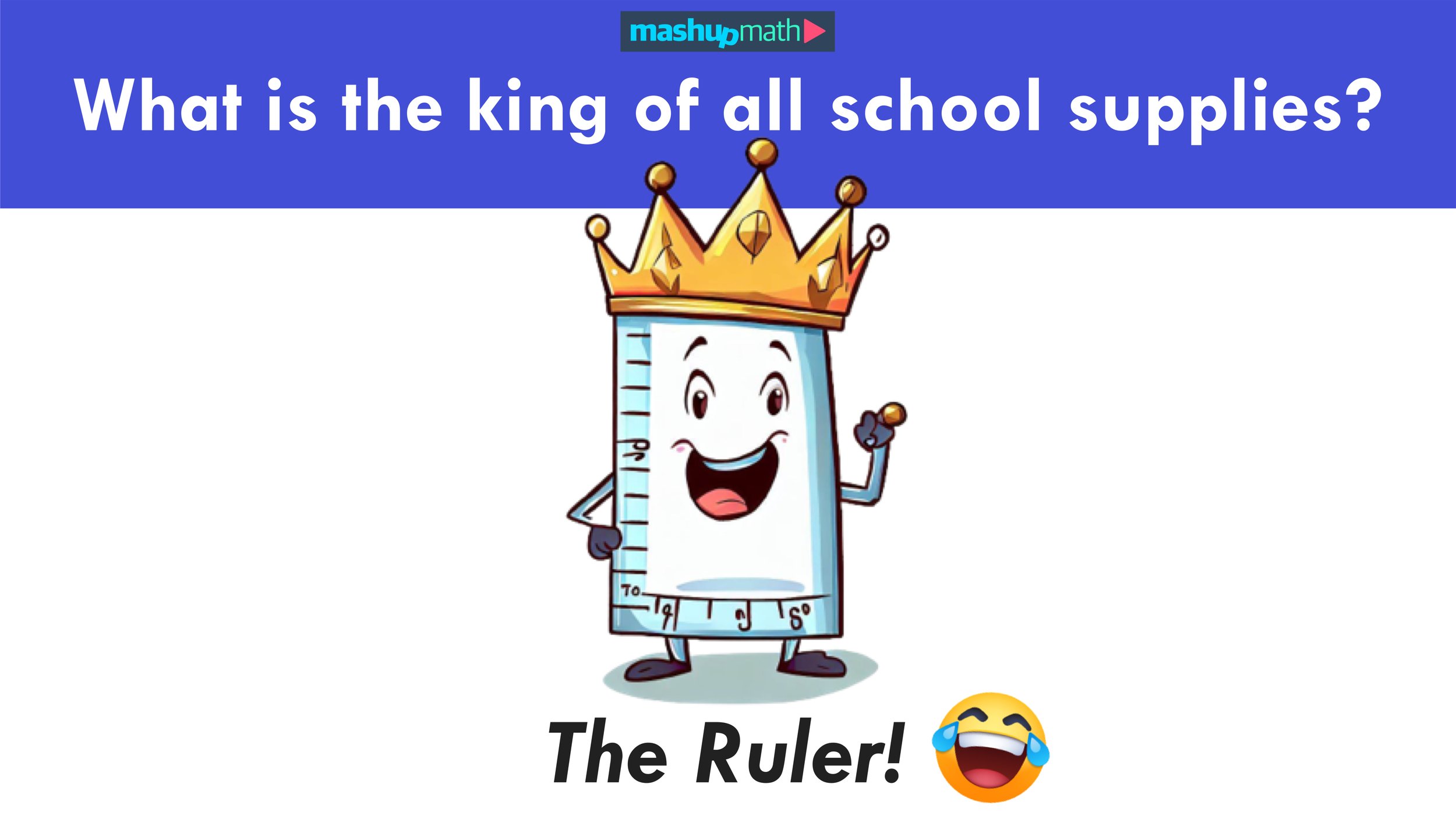
Back to School Jokes for Kids (Image: Mashup Math)
8.) Why did the teacher wear sunglasses to school every day?
Because her students were too bright!
9) Why did the teacher take away a student’s scisccors?
So he couldn’t cut class!
10.) How do bees get to school?
They take the school buzz!

Back to School Jokes for Kids (Image: Mashup Math)
11.) How does a math teacher mow their lawn?
With a pro-tractor!
12.) What did the paper say to the pencil?
Write-on, Bro!
13.) How do you get straight A's?
By using a ruler!
14.) Why did the vocabulary book look so confused?
Because it lost its words!
15.) Are all monsters bad at math?
Not unless you Count Dracula!

Back to School Jokes for Kids (Image: Mashup Math)
16.) Why was the school cafeteria’s clock always behind?
Because it was taking too many lunch breaks.
17.) What did the paper say to the eraser?
I feel wiped out when I spend time with you!
18.) What is a history teacher's favorite fruit?
Dates!
19.) Why was the cyclops such a good teacher?
He only had one pupil!

Back to School Jokes for Kids (Image: Mashup Math)
20.) What did the eraser say after the first day of school?
I don’t think I’m going to make it to graduation!
21.) Why was the chalk so excited on the first day of school?
Because it was ready to make its mark!
How to Use These Back to School Jokes with Your Students
Now that you’ve had a chuckle or three, it’s time to plan how you will use some of the above back to school jokes with your students during the first week of school.
The first days of a new school year are filled with excitement, anxiety, and anticipation for teachers and students alike. With so much going on, a great strategy for taking the edge off and making your students feel more welcome and at ease is to include some humor in your first week of school lesson plans. And including a few of our back to school jokes and puns is a great way to get your students laughing and feeling positive about being a member of your class.
For ideas on how to incorporate back to school jokes into your upcoming lessons, here are a few suggestions:
Start the day off with a joke. One easy way to inject some humor into your classes is to choose your five favorite back to school jokes for kids from the list above and share one with your class to start the day every day for the entire first week of school. This is a simple way to get students to look forward to your class, fostering a positive outlook for the remainder of the school year.
Break the ice. If your students happen to be quiet and reserved at the start of the school year, sharing a few silly or corny back to school jokes is a great way to break the ice during the first week of the school year.
Add jokes into your lessons. If applicable, you can add some humor to your lesson plans by incorporating on-topic jokes related to whatever topic or subject you are teaching that day.
Create a joke bulletin board. Looking for classroom decoration ideas? If you have space in your classroom, consider posting a joke bulletin board where you can print and share your favorite back to school jokes. You can also allow students the opportunity to present their own school-themed jokes that you can post as well.
Add humor to your digital communication. Do you have a teacher website or an email newsletter? Silly back to school jokes can be shared outside of the classroom with fellow teachers and parents by including them in your digital communications. If you have a teacher website or an email newsletter, you can easily add your favorite joke as a way of incorporating some light humor into your communications.
Friday reflection. The first week of school can sometimes feel like it lasts an entire month. When the craziness settles and the first Friday arrives, students will be eager to reflect and share their feelings and experiences related to the first week of school. One great way to get that conversation started is to have students share which joke was their favorite and how humor helped them feel more at ease during the chaotic first week of school. This simple activity gives students an opportunity to express their feelings and lets them know that your classroom is a safe and open environment for sharing ones thoughts and opinions.
In conclusion, including a few fun back to school jokes during the first week of school this year is a fun and useful strategy for easing your students into a new school year and showing them that your classroom is a fun and engaging environment for interaction and learning. By incorporating humor when appropriate, teachers can show their students that school is an enjoyable place and one that they should look forward to returning to day in and day out.
Want More Funny Math Jokes?
Then you’ll love this ultimate collection of the funniest, zaniest, wackiest, and silliest math jokes and puns for all ages! Click here to get your math jokes today!
More Posts You Will Enjoy:


Did we miss your favorite back to school joke or pun? Share your thoughts and suggestions in the comments section below!
(Never miss a Mashup Math blog--click here to get our weekly newsletter!)
Cause and Effect Examples and Explanations
5 Examples of Cause and Effect in Life, Nature, Math, and Literature

What are examples of cause and effect relationships? (Image: Mashup Math via Getty)
Whether you realize it or not, the continuous flow of events that make up everyday life are all driven by cause and effect relationships.
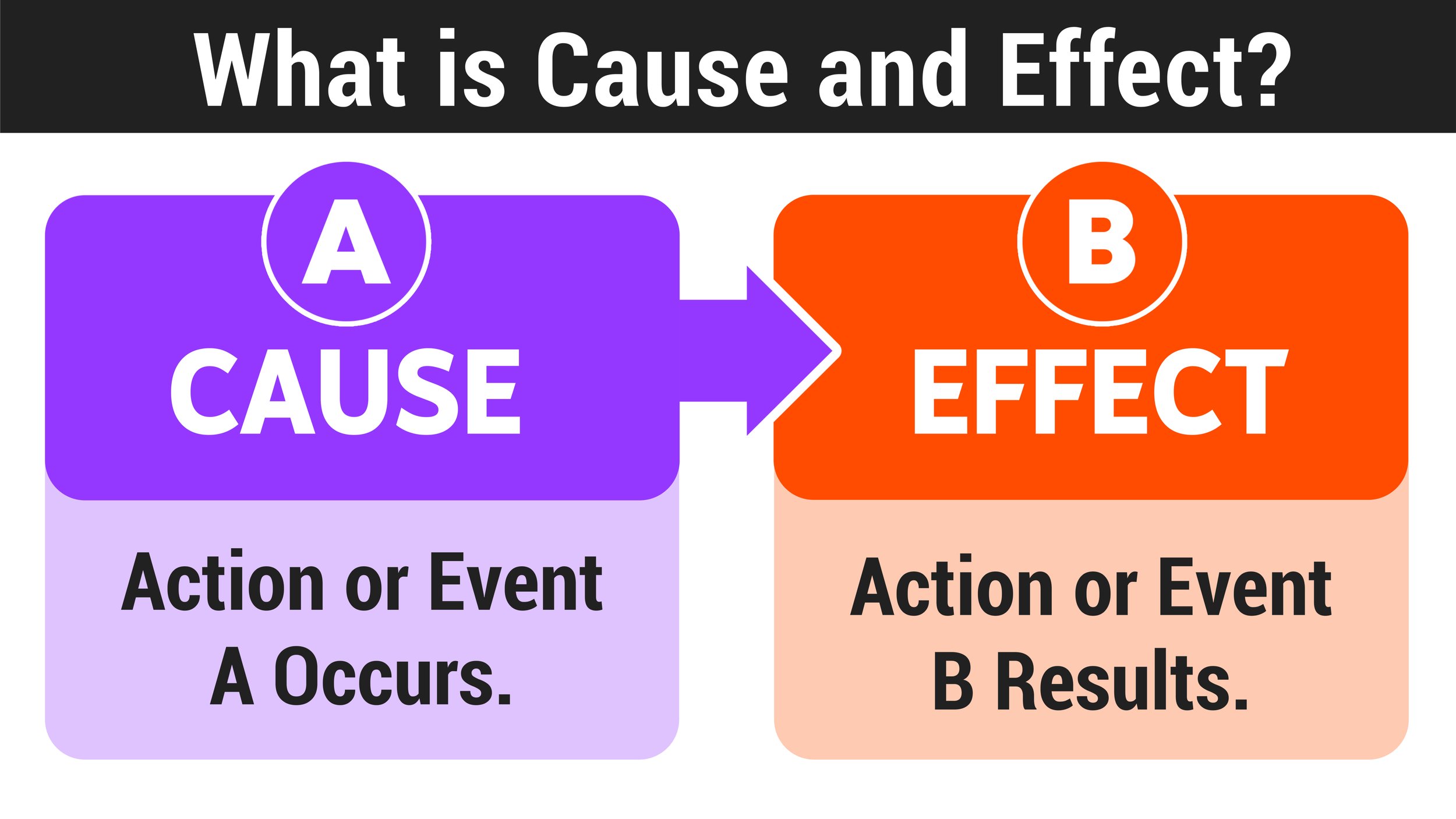
Whenever one specific action or event leads to another, cause and effect is at play. This relationship between an action and/or event and the directly resulting consequence or outcome is the foundation of the concept of cause and effect.
In this post, we will analyze 5 unique cause and effect examples to help you to better understand cause and effect relationships and how they work.
What is Cause and Effect?
Before we take an in-depth look at a few cause and effect examples, it’s important that you first understand the exact definition of a cause and effect relationship.
So, what is cause and effect?
Definition: A cause and effect relationship is the interaction between actions or events where one action or event (the cause) is the trigger that results in another action or event (the effect). In a cause and effect relationship, the effect is the result of the cause.

Definition: What is cause and effect?
This A➔B relationship is fundamental to understanding and explaining our world and how all things are connected. Cause and effect not only applies to mathematics, but to nature, life, and beyond.
While these definitions may seem very broad and philosophical, they are actually extremely simple and understanding what is cause and effect is a part of the human experience for every person.
If you are still a bit confused, looking at a few examples will make understanding cause and effect much easier for you. So, let’s go ahead and look at a simple example of a cause and effect relationship.

Example of Cause and Effect
Let’s start with a simple cause and effect example: after a rain storm, there are puddles on the street. In this example, we can consider the rain storm as a cause and the puddles as the effect.
In this case, the puddles forming were a result of the rain storm. If the rain storm never occurred, then the puddles would have never formed.
Examples like this should help you to understand that cause and effect relationships are extremely logical and they apply any situation or field of study concerned with patterns and outcomes.
Furthermore, cause and effect relationships help us to make sense of our world and make safe predictions about future events.
In the next section, we will take a deeper look at 5 unique cause and effect examples related to mathematics, history, nature, and daily life.
5 Cause and Effect Examples & Explanations
#1: Cause and Effect Examples: Learning How to Surf
The saying practice makes perfect is an application of a cause and effect relationship.
Whenever you are attempting to learn a new skill (how to surf in this example), the more time that you spend practicing, the better you become at the skill. This rule is true for learning any new skill, whether it be playing an instrument, speaking a new language, or riding a bike.
In the case of surfing, the amount of time a person spends practicing surfing is the cause and actually being able to surf is the effect. Without the cause (practicing), there would be no effect (knowing how to surf).
Another way of looking at this example is if someone who did not know how to surf hired an instructor and took a surfing classes. After several classes, the person learned how to surf. In this case, taking a surfing class would be the cause and being able to surf would be the effect.
Cause and Effect Example #1

A➔B: Taking surf lessons ➔ Being able to surf
Photo by Marvin Meyer on Unsplash
#2: Cause and Effect Examples: Weight Gain
According to the FDA, eating more calories than you burn leads to weight gain.
Whenever a person over-consumes calories without engaging in corresponding rigorous exercise, they can expect the result to be gaining body fat and an increase in body weight.
In this example, eating more calories than you burn is the cause and weight gain is the effect.
#3: Cause and Effect Examples: Deforestation and Climate Change
Cause and effect relationships also apply to nature and civilization.
For example, trees reduce the amount of greenhouse gases in our atmosphere.
Whenever forests are cut down (deforestation), greenhouse gases increase, which causes global warming and climate change.
So, in this example, the act of deforestation is the cause and global warming and climate change is the effect.
Cause and Effect Example #3

A➔B: Deforestation ➔ Global Warming
Photo by roya ann miller on Unsplash
#4: Cause and Effect Examples: Literature and Relationships
In this example, let’s take a look at how cause and effect plays a role in human relationships by examining Shakespeare’s Romeo and Juliet.
In the case of the classic tragedy, the ongoing feud between the Montague and Capulet families is the cause and the tragic deaths of Romeo and Juliet is the effect.
Why? Because the rivalry between the families is what led Romeo and Juliet to believe that they could never be together, thus spurring their decision to take their own lives.
#5: Cause and Effect Examples: Economics
In the case of economics, governments often argue for lowering taxes on businesses in an effort to boost economic growth and employment.
For example, a government may say that cutting taxes placed on businesses (the cause) will result in those businesses having more money on hand for investing. As a result, the government would expect a boost in employment and a spark in economic growth (effect).
Cause and Effect Example #5

A➔B: Lowering Taxes ➔ Economic Growth
Photo by Guilherme Cunha on Unsplash
Conclusion: Examples of Cause and Effect
No matter your current field of study, understanding cause and effect relationships is an extremely simple, yet powerful logic tool that will help you to make sense of basic and advanced concepts and ideas alike. By gaining a deep understanding of cause and effect relationships (which you can do by examining the cause and effect examples in this post), you will be better able to predict outcomes, think logically, solve complex problems, and make informed decisions.
In essence, every action has a reaction and there are consequences to our actions. And so, every action or event that is a cause has its corresponding action or event that is its effect. These simple concepts form the foundation of logical thinking and they will apply to all aspects of life.
Keep Learning

Who Invented Math? A Quick Explanation for Students
The history of math runs deep and spans across a variety of ancient cultures and civilizations, which leads many to wonder who invented math?
Let’s explore who gets the credit and why!



How Long Does It Take to Count to a Million?—Explained
How long would it take to count to a million and can it be done?

How long does it take to count to a million? (Image: Mashup Math via Getty)
So, you’re wondering how long would it take to count to a million. From a mathematical standpoint, the question itself seems simple enough. After all, you’re only interested in how much time it would take for the average person to actually count from one to one million. The answer must be some amount of time expressed in hours, days, or possibly even weeks or months.
And so our journey begins. To figure out how long it takes to count to a million, we will have to explore the number one million itself and perform a few calculations to see just how long it would take the average person to count to a million in both theoretical and practical scenarios.
This post explores two scenarios:
Are you ready to get started?
The Number One Million Explained
Before you learn just how long it takes to count to a million, it’s important that you have a solid understanding of the actual number and how relatively large it actually is. One of the best ways to grasp the magnitude of the number one million is to think of it as one thousand thousands.
In numeric form, this means that:
1,000,000 = 1,000 x 1,000
So, counting to one million is the same thing as counting to 1,000 a thousand times! With this new perspective of a million in mind, it’s obvious that counting to a million is a pretty challenging task that would require a ton of time, effort, patience, and sheer will and dedication.
Now that you have a better understanding of how large a million actually is, you are ready to learn just how long it would take to reach this counting milestone.
How Long Does It Take to Count to a Million? To count to a million, you would have to count to a thousand a thousand times!
Theory : How Long to Count to a Million?
It’s finally time to perform some calculations to figure out how long it would theoretically take a person to count to a million.
We can start by considering the rate at which an average person can count and the total amount of numbers that will need to be counted (one million in this case).
Everyone counts numbers at different rates, but, for the sake of simplicity, let’s just assume that the average person can count one number per second. At this rate, it would take the person 1,000,000 seconds to count to a million.
But how long is 1,000,000 seconds? Well, to put this into perspective, one million seconds is approximately equivalent to 11 days, 13 hours, 46 minutes, and 40 seconds.
This means that, theoretically speaking, if a person were to count numbers at a rate of one number per second, it would require them to count for about 11.5 days straight without sleeping or taking any breaks!
Theoretically speaking, if a person were to count numbers at a rate of one number per second, it would require them to count for about 11.5 days straight without sleeping or taking any breaks!
While this answer to the question How Long Does It Take to Count to a Million? is true in theory, it is unrealistic in practice since it would be nearly impossible for a person to count non-stop all day and all night for nearly 12 consecutive days.
And it should be no surprise that a person has never counted from one to a million without stopping. But has a person ever counted to a million under more realistic conditions?

How long would it take to count to a million without stopping?
Reality : How Long to Count to a Million?
You now know that it would take nearly 12 days of non-stop counting to get from one to a million, which is a feat that is practically impossible for a human being to achieve.
In reality, a person can not count at a constant rate for days at a time since human beings, unlike computers, are subject to becoming tired, hungry, and fatigued.
However, this does not mean that a human being is not capable of counting to a million. It only means that getting there would take longer than 12 days since a human needs to take breaks from counting to eat, sleep, rest, etc.
While it is unknown how many people have counted to a million in their lifetimes, we do know of at least one person who has accomplished the feat—an American man named Jeremy Harper who holds the Guinness World Record for counting to a million.
Harper started counting on June 18, 2007 and reached a million on September 14, 2007. To achieve the milestone, Harper spent 16 hours per day counting and it took him a total of 89 days to complete the task! That means that the world record for counting to a million is nearly 3 months!
The feat was live-streamed daily from Harper’s home in Alabama. During his count, he never left his house or even shaved his face. His efforts raised over $10,000 USD for charity.
The world record for counting to a million is held by Jeremy Harper, who counted for 89 consecutive days for 16 hours a day.
Conclusion: How Long Does It Take to Count to a Million?
At this point, you should have a better appreciation for the magnitude of the number one million and the fact that counting to a million would take you at least 3 months to accomplish.
For the vast majority of people, counting to a million is probably not worth the time or energy, but exploring the question itself has hopefully been a fun and engaging experience.
And, if you ever again come across the question How long does it take to count to a million?, you will be equipped with a response that most will find surprising—the answer is that counting to a million would take you so long that it simply would not be worth attempting!
More Free Resources You Will Love:
Who Invented Math? A Quick Explanation for Students
The history of math runs deep and spans across a variety of ancient cultures and civilizations, which leads many to wonder who invented math?
Lets explore who gets the credit and why!

Boosting Math Positivity
Neurological Insights and Strategies for Elementary & Middle School Math

How can you boost math positivity at home and in the classroom?
(Image: Mashup Math via Getty)
From a neurological perspective, the way that we present math to kids makes a world of difference in terms of how it contributes to their mental development.
Before students can dive into the exciting world of mathematics, they need to feel comfortable about the subject as a whole. When it comes to helping kids ease into mathematics, the learning environment created by the teacher must make students feel safe, valued, and included. Additionally, it is crucial that students learn to be resilient when working on math problems and that they have a strong set of problem-solving strategies to work with. Under the right conditions, teachers can set their students up for success by creating an environment where students can process new information through their brain’s emotional filters before redirecting it to their prefrontal cortex (PFC), which is the brain’s hub for high-level and high-order thinking. The more experience students gain in using their PFC to learn math, the better off they will be in all subjects, since the PFC is where critical and analytical thinking occurs.
If you are interested in how mathematics can be taught in such a way that helps students to develop their PFC, below are a few helpful strategies.
Nurturing Math Positivity: Starting at Home

Parents often put a lot of pressure on kids to do well in math. But making the subject extremely stressful often does more harm than good and results in kids’ developing lasting negative attitudes about the subject as a whole.
For parents at home, a strategy for boosting math positivity is to hold regular family math meetings with your kids.
These family math meetings are a great opportunity for parents and caretakers to apply what they know about the negative effects of academic pressure and stress. This insight can be shared with children in the form of conversations about how they generally feel about their education at any given point in time. In these meetings, it is the parents’ job to facilitate conversations that will help students to develop and maintain positive attitudes about learning math and why making mistakes is actually a positive thing, since mistakes are the stepping stones along the path of learning (i.e. learning with a growth mindset).
Also, parents can play the important role of being a positive proponent of math in their kids’ lives. By finding ways to make math relevant and related to their child’s interests, you can reinforce the idea that mathematics is not only relevant to real life, but useful and exciting as well.
For example, parents can show their kids how mathematics is used to develop video games, sports, fashion, or other real-world math connections. When parents connect math to real life, their kids learn to see the subject as more practical and fun.

Giving students an opportunity for retest after a poor performance can help restore their sense of control. Photo by Santi Vedrí on Unsplash
Reset and Re-Test When Necessary
As for helping students in the classroom, teachers should consider allowing students the opportunity to retest after a poor performance. Why? Because having a solid foundation in mathematics is crucial for future success, and giving students the opportunity to retest allows them restore a sense of control of their learning and keeps them from falling behind. When students are given the opportunity to retest, they are able to review, learn from past mistakes, and actually reinforce their understanding of whatever the topic is.
And, since math topics typically build upon each other, it will greatly reduce their chances of falling so far behind that they can never get caught back up. The goal of retesting is not just to improve a student’s grades—it is about making sure that your students are set up to succeed and are given every opportunity to learn the material and develop into skilled thinkers, problem-solvers, and mathematicians.
Many teachers require students to show some sort of proof that they deserve a chance to retest, which is a strategy that may work well for your classroom. Examples of such proof include tutoring sessions, extra help attendance, or taking practice tests online. Such requirements make students more vested and accountable in their learning. You can also take the average of the first test and the retest to prevent students from not taking the first version seriously.

Taking Mathematics Beyond the Classroom
If you really want to get your students interested and excited about learning math, then you will have to capture their imaginations and sense of wonder. Great math teachers know how to present math as an incredibly useful and practical tool that can be used in all areas of life, rather than just a boring school subject.
By showing how math applies to everything around us, students begin to see learning math as relevant, exciting, and worthwhile. This is yet another strategy that can be used to help your kids develop positive attitudes towards learning math.
Keep these strategies in mind as you work towards building math positivity at home and/or in your classroom. If we want our students to stick with math and take advantage everything the subject has to offer, then fostering positive attitudes about math must be a top priority.
Keywords: Math Positivity, Elementary & Middle School Math, Neurological Insights, Math Strategies, Prefrontal Cortex, Family Conferences, Retests in Math, Real-world Math Applications
More Math Education Insights You Will Love:
When Was Chess Invented and Where Did It Originate?
The History of Chess: Who Invented The Game of Kings?
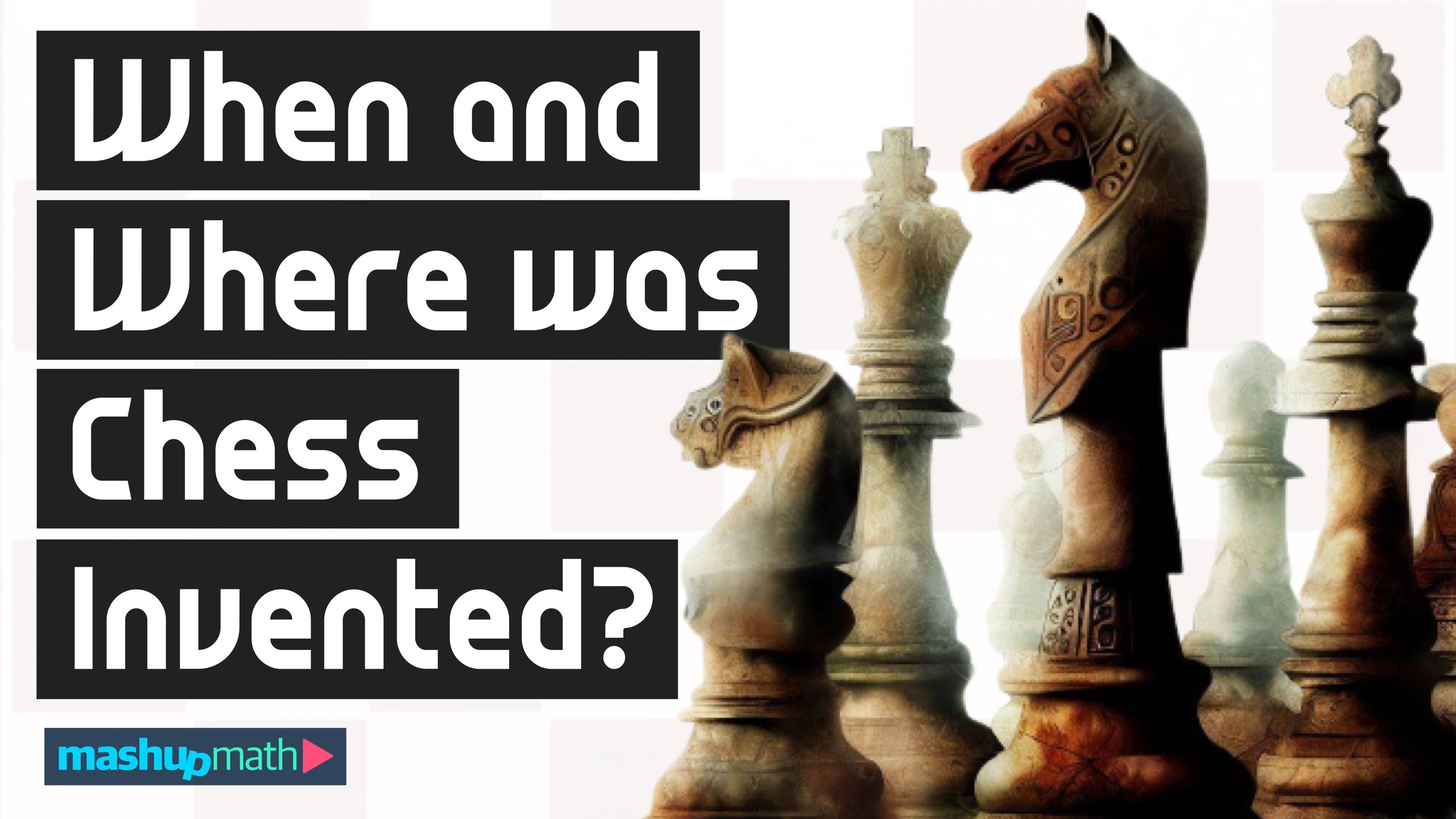
When Was Chess Invented and Where Did It Originate?
The prominent sound of a marble pawn dragging across the surface of a smooth chessboard resonates throughout the room as you move your pawn forward, starting off the intense battle of mental strategy that is the game of chess.
As you play against your opponent and contemplate your next strategic move, you are engaging in an ancient tradition with a history spanning over a millennium. It’s no wonder why those who love and appreciate the game often wonder “when was chess invented?” and “who invented chess?”
In today’s post, we will explore the enchanting history of the game of chess, tracing its origin and evolution from its birth at the time of the ancient civilizations and to its existence as we know it today.
When was chess invented and how did it become the game as we know it today?
When and Where Did Chess Originate?
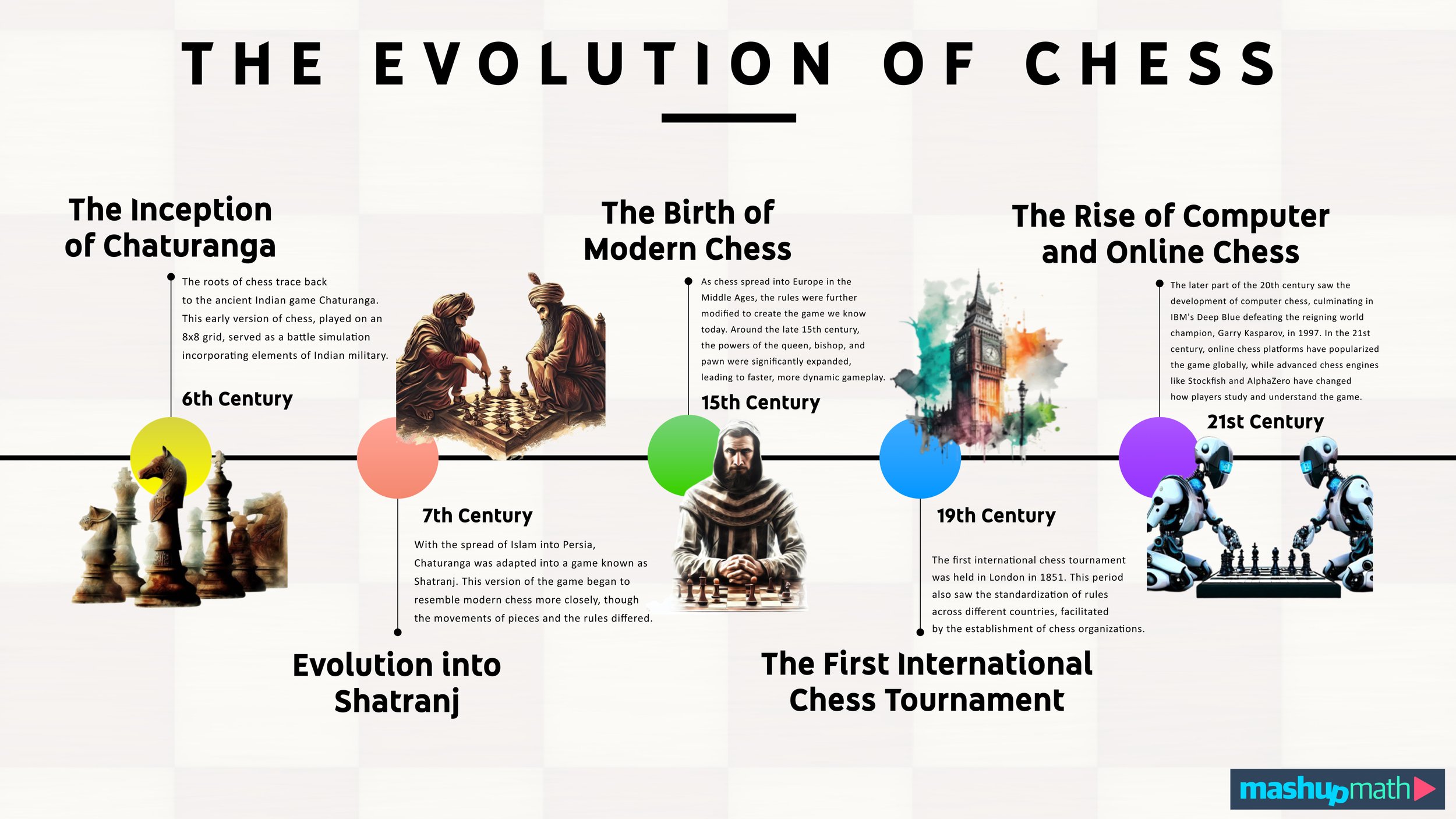
Exploring the answer to the questions, “When was chess invented?,” we have to travel back approximately 1,500 years into the past, where the earliest form of the game of chess is believed by historians to have originated from the Gupta Empire in Northern India in the 6th century.
The earliest form of the game was called Chaturanga and it was centered on strategy and military tactics where each game piece represented a different branch of the military.
Considered in ancient times to be a simulation of war, Chaturanga utilized an 8x8 square game board similar to the chess board that is used today. However, unlike chess, the original game involved the use of dice, which were used to determine which piece a player was allowed to move. Also, the game pieces had different movements and the game itself required four players instead of two.
However, this original version of the game would continue to evolve as the use of dice would eventually cease as the game would continue to evolve into what we now call chess, which is primarily focused on strategy and skill rather than chance.
How Old is the Game of Chess?
Answer: The game of chess, in its original form, is approximately 1,500 years old.

Who invented chess? The earliest form of the game of chess was called Chaturanga and it originated in Northern India during the 6th century. It was played on an 8x8 board and focused on military strategy and chance.
Who Invented Chess in Its Early Forms?
As trade routes and military conquest expanded the Gupta Empire, the game known as chaturanga eventually made its way to Persia, where it evolved into its next iteration—a game called shantranj.
The iteration known as shantranj made changes to the rules of the game and the movements of the pieces. Most notably, the Persians changed the game so that it was played between only two players rather than four.
Given the contributions of the Persians, many believe that the answer to the question, "Who invented chess in its early forms?" is not a straightforward one. Scholars credit both the Indian introduction of the game chaturanga and its evolution into the game shantranj by the Persians as playing a crucial role in evolving chess into the strategy game that we know today.
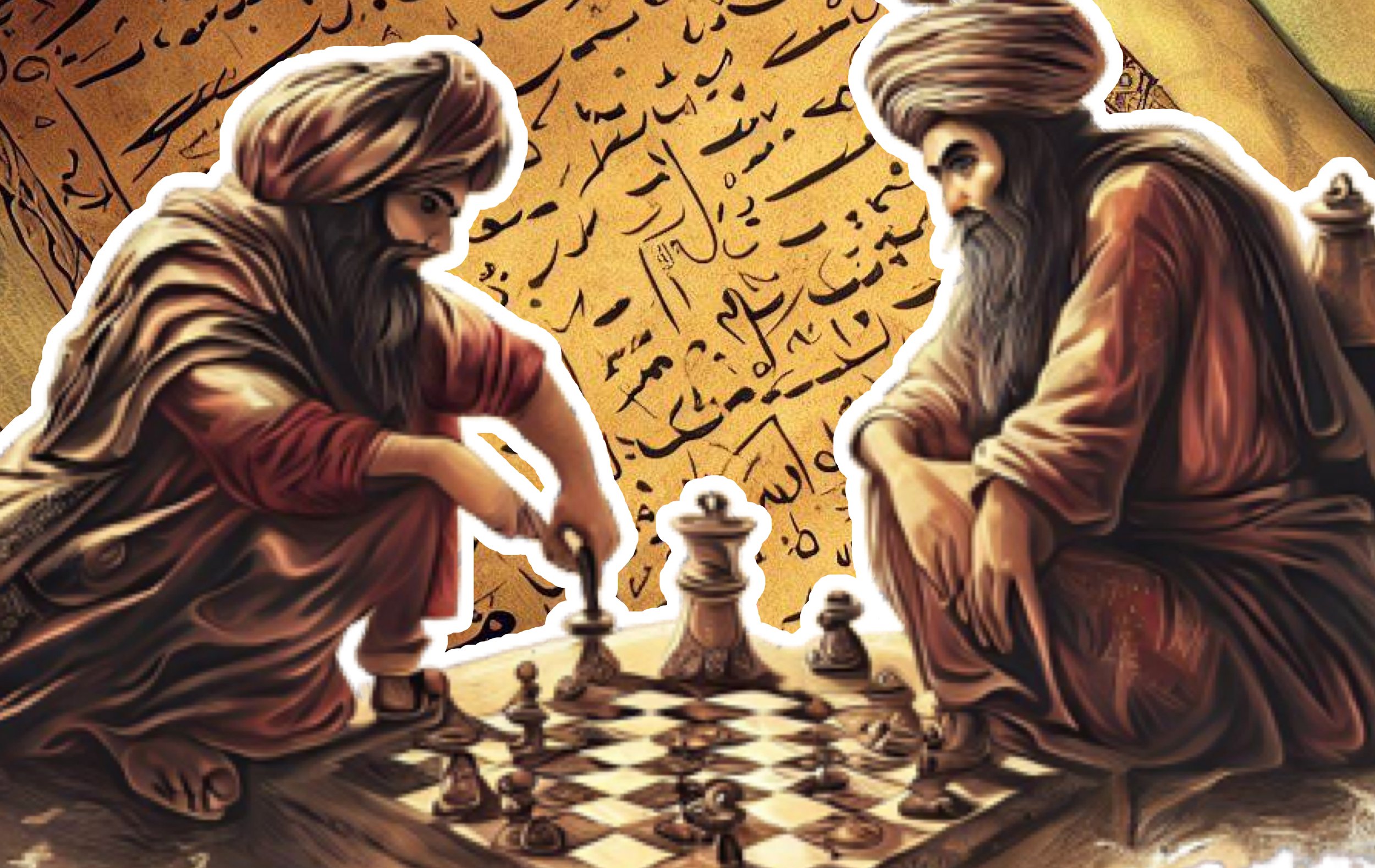
Who Invented Chess in Its Early Forms? The Persians transformed chaturanga into a game known as shantranj, which changed the rules and the movements of the pieces.
How Old Is Chess in its Modern Form?
Shatranj quickly became popular in the Muslim world and it wasn’t long before the game made its way to Europe around the 10th century.
The introduction of the game to Europe marks a major milestone in the history of chess, as Europeans contributed significant changes to the game between the 10th and 15th centuries. During this era, the modern Queen, Bishop, and Pawn game pieces movement patterns were established and are still used hundreds of years later in the modern version of chess.
The game of chess and its modern rules were essentially established in Europe by the end of the 15th century. It was during this time that the foundation of advanced game strategy and theory was born and gave way to the rise of chess Grandmasters—players who are recognized for their superior skill and accomplishment in the game of chess.
Eventually, modern organizations like the World Chess Federation (FIDE) were formed and the game’s international popularity would explode as international tournaments became widespread.
By the 20th century, the world would see the rise of chess legends including Anatoly Karpov, Bobby Fischer, and Garry Kasparov, all of whom pushed the boundaries of chess strategy and theory to new heights.
How Old Is Chess in its Modern Form? The Europeans would contribution significant changes to the game between the 10th and 15th centuries
Chess in the 21st Century: Tradition Meets Technology
Deep into the 21st century, chess remains extremely popular on a global scale.
While the game remains true to its ancient traditions, it is also ever-evolving due to the role of modern technology. One of the most incredible developments to the evolution to the game of chess is the application of advanced computing power programs that are capable of evaluating millions of moves and positions in fractions of a second, which allows them to play astronomical amounts of games, learn advanced strategy, and continue to improve.
Such programs have become formidable and often unbeatable opponents for even the best players in the world.
Additionally, the rise of digital chess platforms has made the game more accessible than ever, as players can compete against human or computer opponents on websites, video games, and apps like Chess.com. With the ability to play chess anytime and anywhere, the popularity of The Game of Kings is higher than ever.

How old is the game of chess?
Conclusion
Despite the evolution of the game of chess to its original form, Chaturanga, from 1,500 years ago to the modern version that we know today, the traditional spirit of the game remains intact. The mental strategies and military-like tactics that have been developed over centuries continue to form the true core of chess, and earning the title of Grandmaster remains an incredibly prestigious title.
In the 21st century, the game of chess is now a wonderfully dynamic combination of tradition, timelessness, and technology, as the game continues to adapt and evolve while holding true to its ancient roots.
Keep Learning:

Chess is a Sport—Here’s Why
Can the game of chess be considered a sport? On one hand, many see chess as merely a game of intense strategy and intellectual skill. For others, chess is clearly a sport due to its competitive nature and high stakes competitive nature.