Dividing Fractions in 3 Easy Steps: Your Complete Guide

3 Comments

Dividing Fractions in 3 Easy Steps: Your Complete Guide

Complete Guide: Dividing Fractions

Key Question: How do you divide fractions by fractions and fractions with whole numbers?
Learn to divide fractions using 3 easy steps.

Learn to divide fractions using 3 easy steps.

Welcome to this free step-by-step guide to dividing fractions. This guide will teach you how to use a simple three-step method called Keep-Change-Flip to easily divide fractions by fractions (and fractions by whole numbers as well).

Below you will find several examples of how to divide fractions using the Keep-Change-Flip method along with an explanation of why the method works for any math problem that involves dividing fractions. Additionally, this free guide includes an animated video lesson and a free practice worksheet with answers!

Are you ready to get started?

Dividing Fractions: Multiplication Review

Before you learn how to divide fractions using the Keep-Change-Flip method, you need to make sure that you understand how to multiply fractions together (which is even easier than dividing!).

Since multiplying fractions is typically taught before dividing fractions, you may already know how to multiply two fractions together. If this is the case, you can skip ahead to the next section.

However, if you want a quick review of how to multiply fractions, here is the rule:

Multiplying Fractions Rule: Whenever multiplying fractions together, multiply the numerators together, then multiply the denominators together as follows…
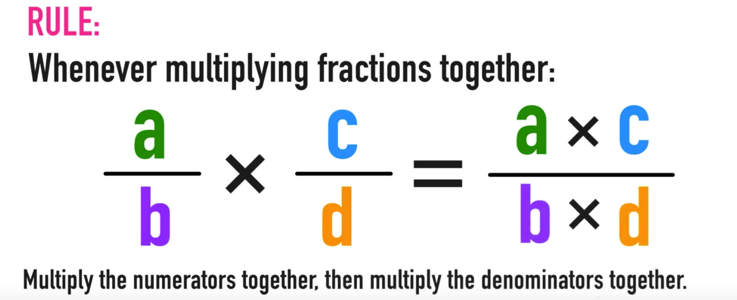
Snip20200320_8.png
 

For example, 3/4 x 1/2 can be solved as follows:

Snip20200320_10.png
Snip20200320_11.jpg
 

FractbyFrac.jpg

Looking for More Help with Multiplying a Fraction by a Fraction? Check out this free guide


Dividing Fractions Examples!

Now that you know how to multiply fractions, you are ready to learn how to divide fractions using the simple 3-step Keep-Change-Flip method.

Let’s start with a simple example

Dividing Fractions Example 1

Example 1: What is 1/2 ÷ 1/4 ?
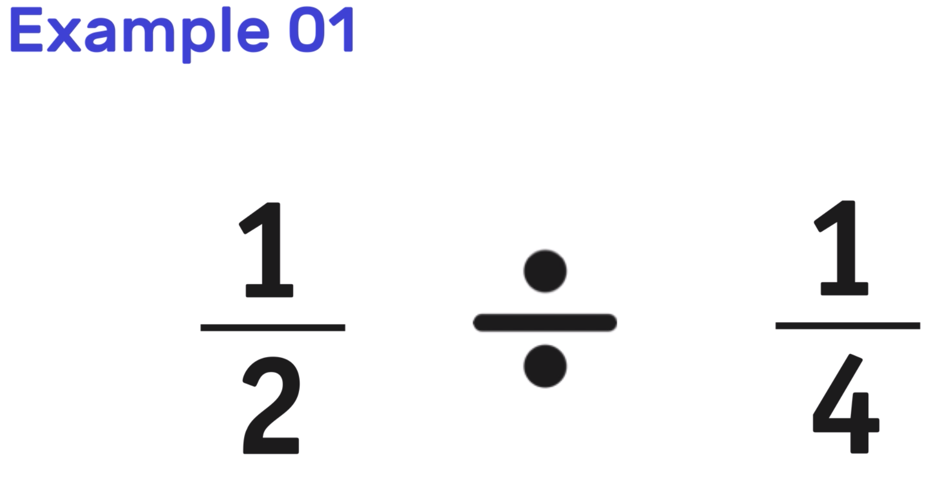
Snip20210317_4.png
 

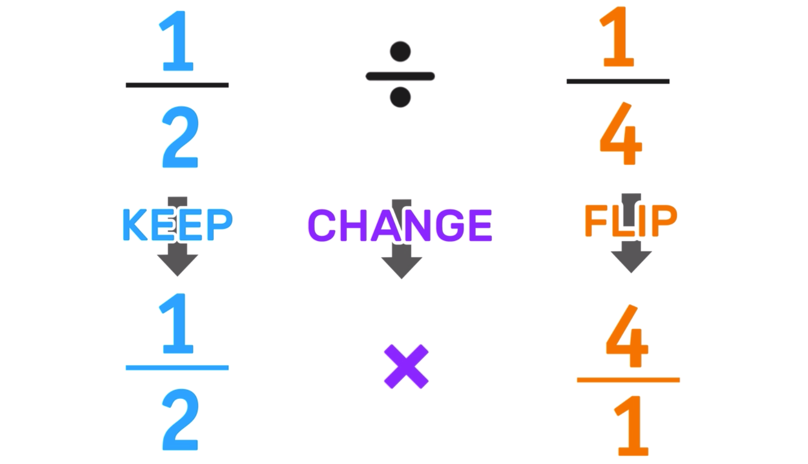
To solve this example (and any problem where you have to divide fractions, we are going to use the Keep-Change-Flip method)

Snip20210317_8.png
 

Where:

1.) KEEP = Keep the first fraction as is and just leave it alone.

2.) CHANGE = Change the division sign to a multiplication sign.

3.) FLIP = Flip the second fraction (swap the numerator and the denominator)

These steps can be applied to example 1 as follows:

Snip20210317_5.png
Snip20210317_6.png
Snip20210317_7.png
 

Again, after applying Keep-Change-Flip, we have transformed the original problem of 1/2 ÷ 1/4 as follows:

Snip20210317_3.png
 

Now you can solve the problem by multiplying the fractions together and simplifying if necessary:

Snip20210317_9.png
Notice that 4/2 can be simplified.

Notice that 4/2 can be simplified.

Snip20210317_11.png
 

The final answer is 2, and we can conclude that the answer to the original problem is…

Final Answer: 1/2 ÷ 1/4 = 2

Snip20210317_12.png
 

Why Does This Answer Mean?

In example 1, we concluded that 1/2 ÷ 1/4 = 2. But what does this actually mean?

If we think about 1/2 ÷ 1/4 in the form of a question: How many 1/4s are in 1/2?

And then if we visualize 1/4 and 1/2, we can clearly see that there are 2 1/4s in 1/2, which is why the final answer is 2.
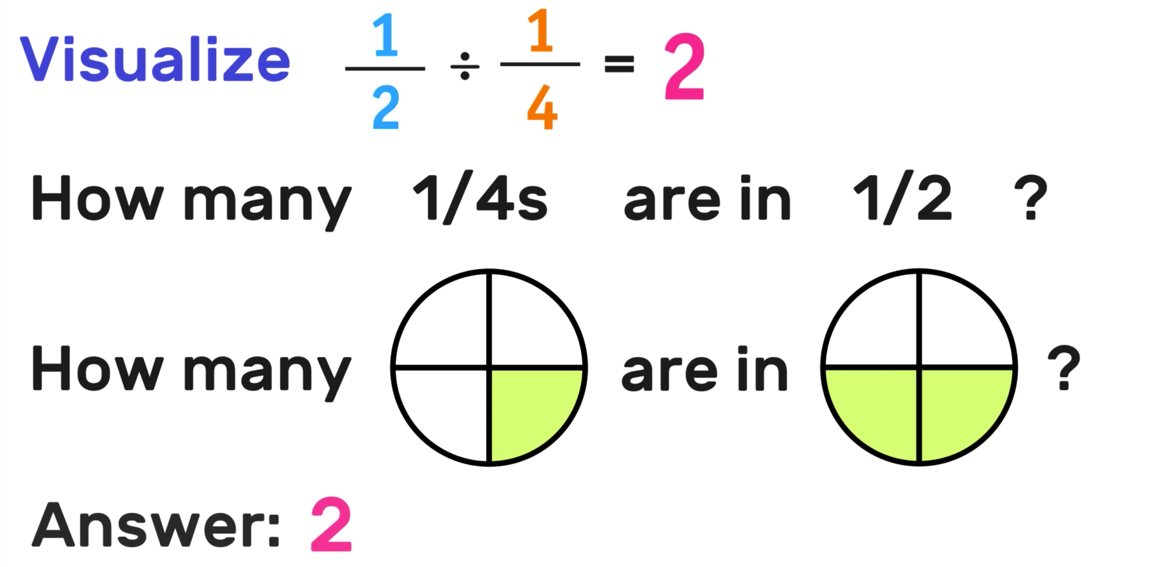
Snip20210317_13.png
 

Fraction Divided by Fraction: Example 2

Example 2: What is 2/9 ÷ 1/3 ?
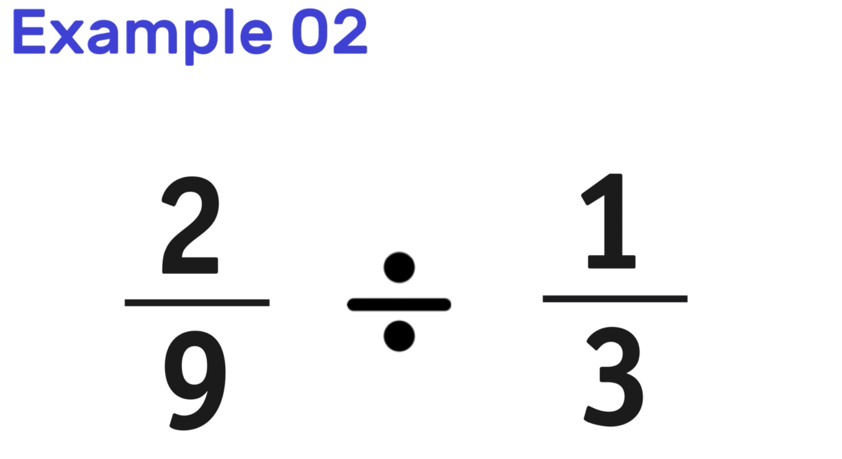
Snip20210317_15.png
 

Just like example 01, you can solve this problem by using the keep change flip method as follows:

1.) Keep the first fraction 2/9 as is.

2.) Change the division sign to multiplication.

3.) Flip the second fraction to turn 1/3 into 3/1

Snip20210317_16.png
Snip20210317_17.png
 

Next, perform 2/9 x 3/1 as follows and simplify the answer if you can:

Snip20210317_18.png
Snip20210317_19.png
Snip20210317_20.png
 

In this example, 6/9 is not the final answer, since it can be reduced to 2/3

The final answer is 2/3, and we can conclude that the answer to the original problem is…

Final Answer: 2/9 ÷ 1/3 = 2/3

Snip20210317_21.png
 

Dividing Fractions by Whole Numbers: Example 3

What if you have to divide a fraction with a whole number? It turns out the process is exactly the same as the previous examples!

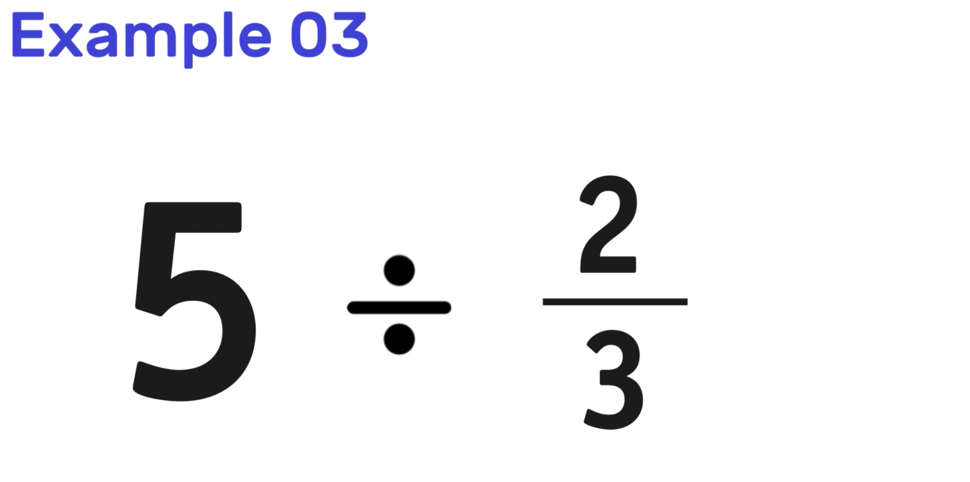
Example 03: What is 5 ÷ 2/3 ?
Snip20210317_22.png
 

Notice that, in this example, you are dividing a fraction with a whole number. But it is actually very easy to convert a whole number into a fraction. All that you have to do is rewrite the number as fraction where the number itself is in the numerator and the denominator is 1.

For example, 5 can be rewritten as 5/1 and this rule applies for any whole number!

Snip20210317_23.png
 

Now that you have rewritten the whole number as a fraction, you can use the Keep-Change-Flip method to solve the problem.

1.) Keep the first fraction 5/1 as is.

2.) Change the division sign to multiplication.

3.) Flip the second fraction to turn 2/3 into 3/2

Snip20210317_24.png
 

Finally, multiply the fractions together and simplify if possible to find the final answer as follows:

Snip20210317_25.png
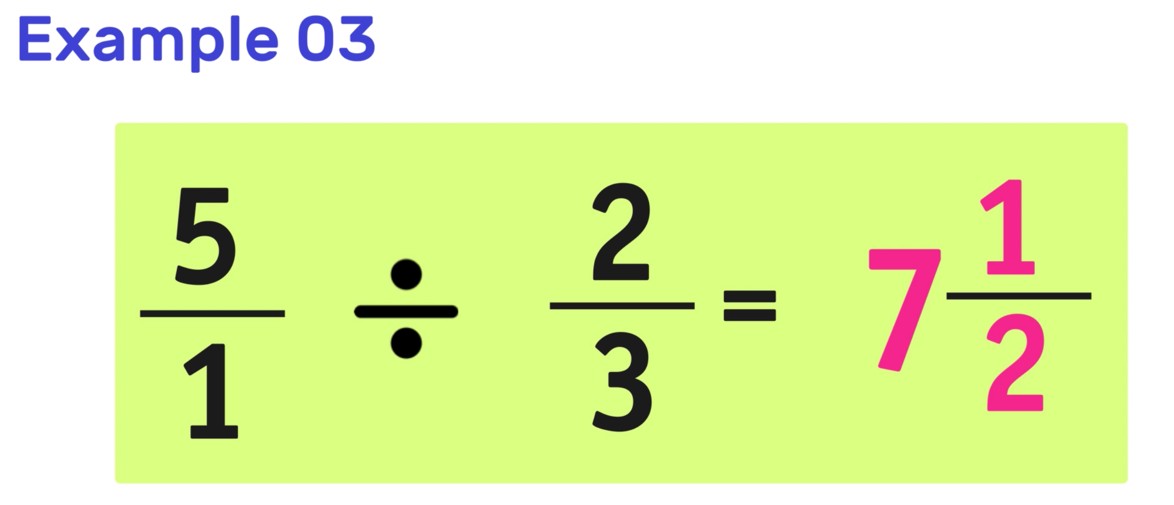
15/2 can not be simplified, however, it can be expressed as 7 & 1/2

15/2 can not be simplified, however, it can be expressed as 7 & 1/2

Snip20210317_27.png
 

In this example, the answer can be expressed as 15/2 or as 7 & 1/2.

And you can conclude that the answer to the original problem is…

Final Answer: 5 ÷ 2/3 = 15/2 or 7&1/2
Snip20210317_28.png
 

Still confused? Check out the animated video lesson below:

Video: Dividing Fractions Explained!

Check out the video lesson below to learn more about how to divide fractions by fractions and fractions by whole numbers:


Dividing Fractions Worksheet
Free Worksheet!

Free Worksheet!

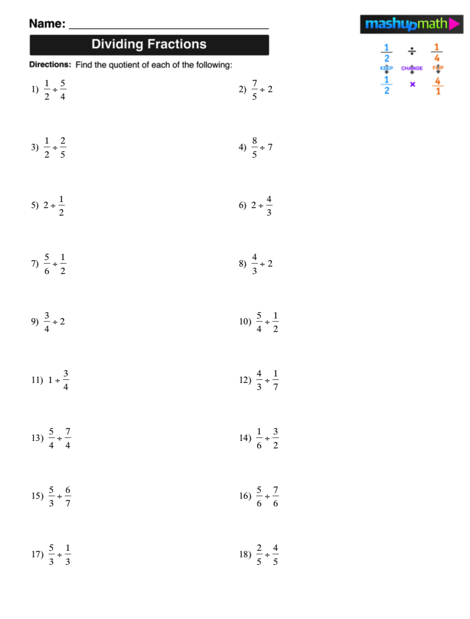
Are you looking for some extra practice dividing fractions? Click the links below to download your free worksheets and answer key:

CLICK HERE TO DOWNLOAD YOUR FREE WORKSHEET

Tags:  divide fractions, dividing fractions by whole numbers, dividing fractions examples, fraction divided by fraction


Keep Learning:
Have thoughts? Share your thoughts in the comments section below!

(Never miss a Mashup Math blog--click here to get our weekly newsletter!)

By Anthony Persico

Anthony is the content crafter and head educator for YouTube's MashUp Math. You can often find me happily developing animated math lessons to share on my YouTube channel . Or spending way too much time at the gym or playing on my phone.
3 Comments

5 Logical Puzzles That Will Bend Your Brain

3 Comments

5 Logical Puzzles That Will Bend Your Brain

5 Logical Puzzles That Will Bend Your Brain (Answers Included!)

A Post By: Anthony Persico

Are you looking to take on some fun and challenging logical puzzles and put your brain power to the test?

Attempting to solve logic puzzles is one of the best ways to improve your problem-solving and logical thinking skills while having lots of fun at the same time.

Today’s post shares a collection of 5 logical puzzles for kids and adults that gradually progress in difficulty—and there’s also a special bonus puzzle that has been stumping people for over 100 years!

Note that the solution to each logic puzzle is included at the bottom of the post (we recommend trying all of the problems on your own first and then checking to see if your answers are correct afterwards).

Are you ready to get started?

7 Puzzles.jpg

Image: Mashup Math FP


5 Logical Puzzles That Will Bend Your Brain

Some of these puzzles can be solved in under one minute, while others are tricky enough to stump you all day long, putting your brain to the test!

Today, you’ll have a chance to give your brain a workout by figuring out a few of these famous logic and number puzzles.

So, are you up for the challenge? And don’t forget to try the bonus puzzle—a simple yet tricky riddle that has been around for over 100 years.

And if you need more detailed explanations of how to solve each logic puzzle, check out our 5 Logical Puzzles That Will Bend Your Brain video below, and be sure to click the like button and leave a comment!

Watch the 5 Logic Puzzles Video:


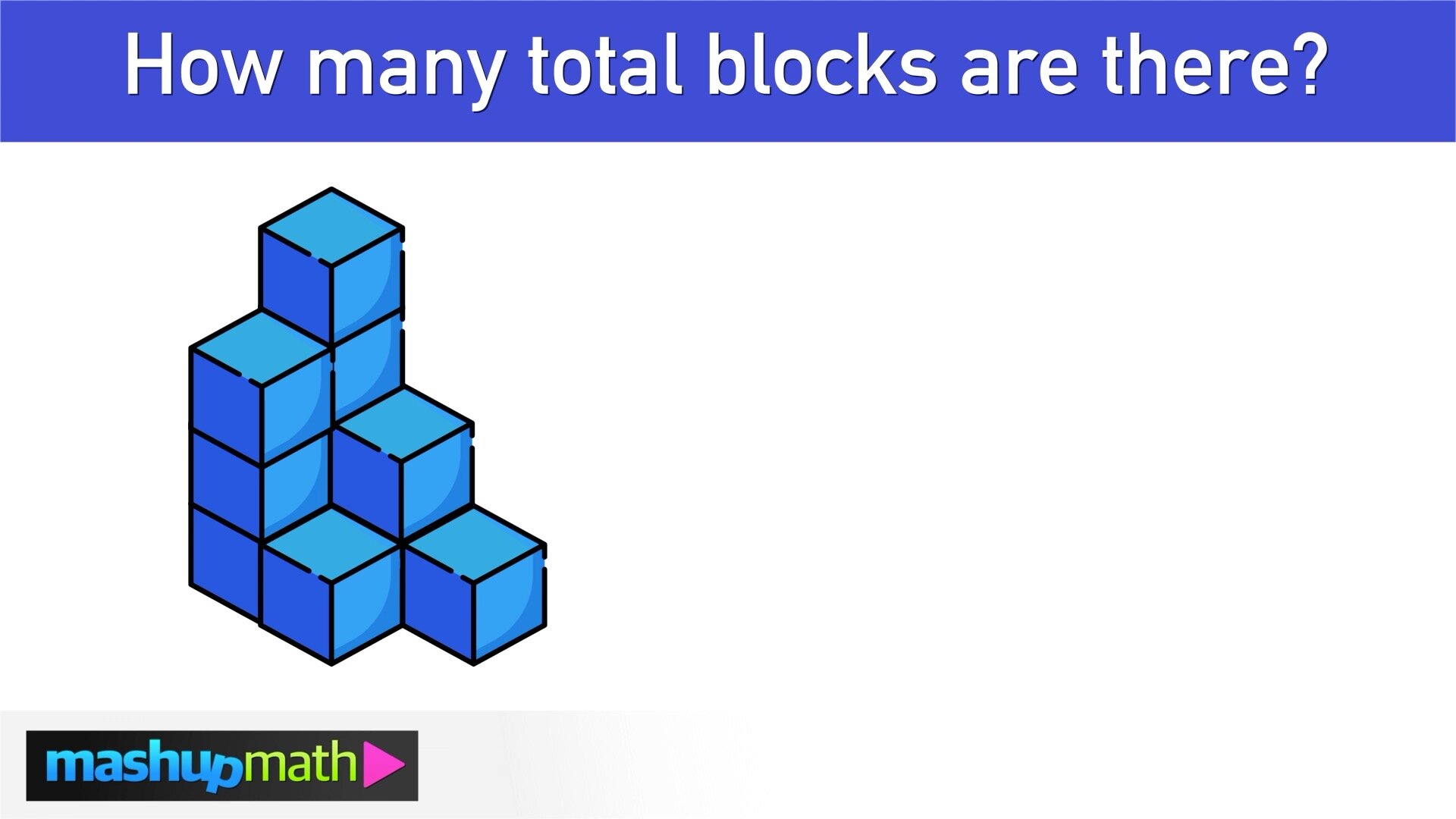
Logical Puzzle #1

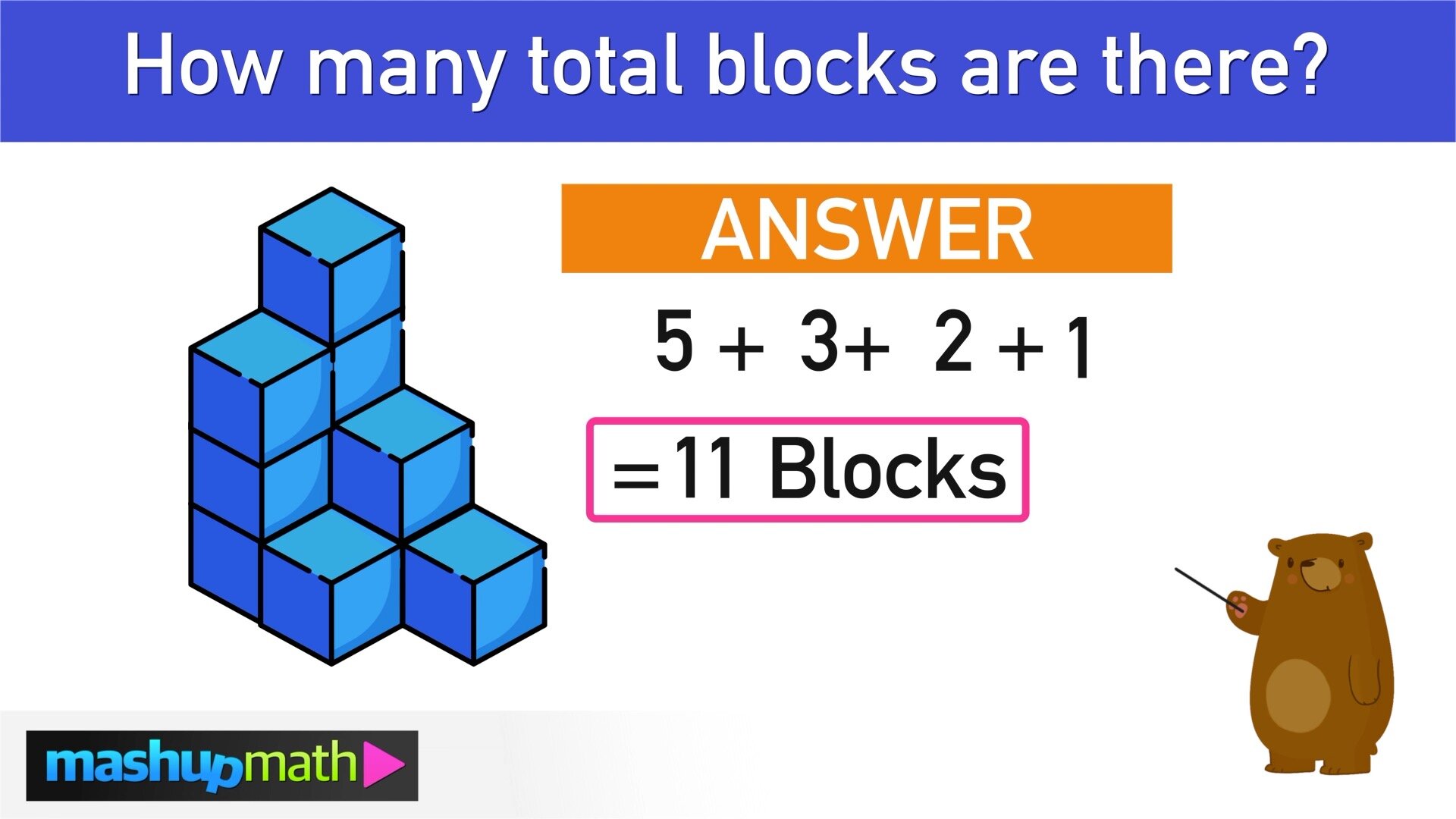
How many total blocks are in the diagram below?

01.jpg

Keep reading to the bottom of this page to see the answer key AND click here to see the video that explains the solution to this problem.


MailingList_GIF_Banner-1.gif

Logical Puzzle #2

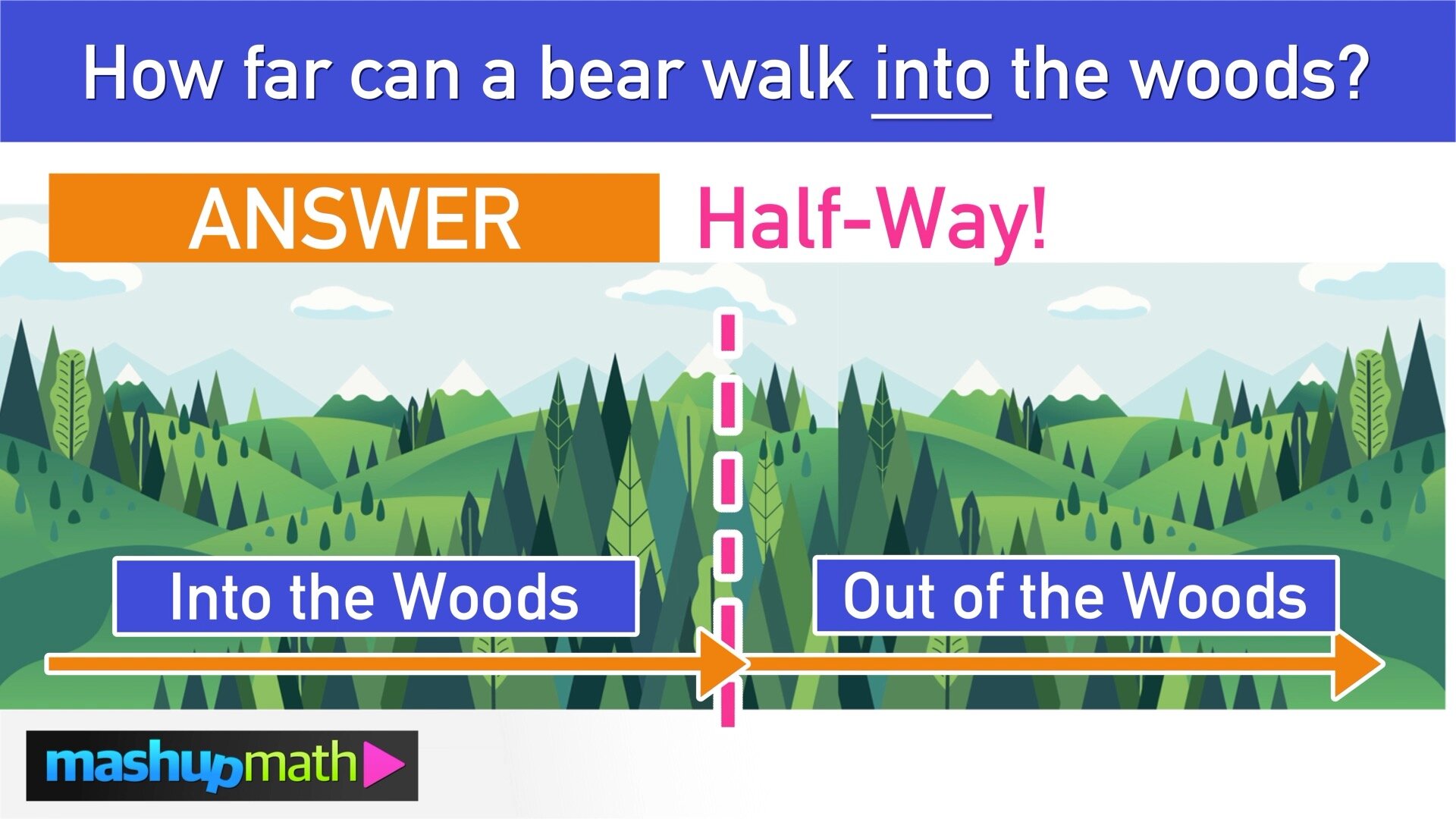
How far can a bear walk into the woods?

02.jpg

Image: Mashup Math FP

Keep reading to the bottom of this page to see the answer key AND click here to see the video that explains the solution to this problem.


Logical Puzzle #3

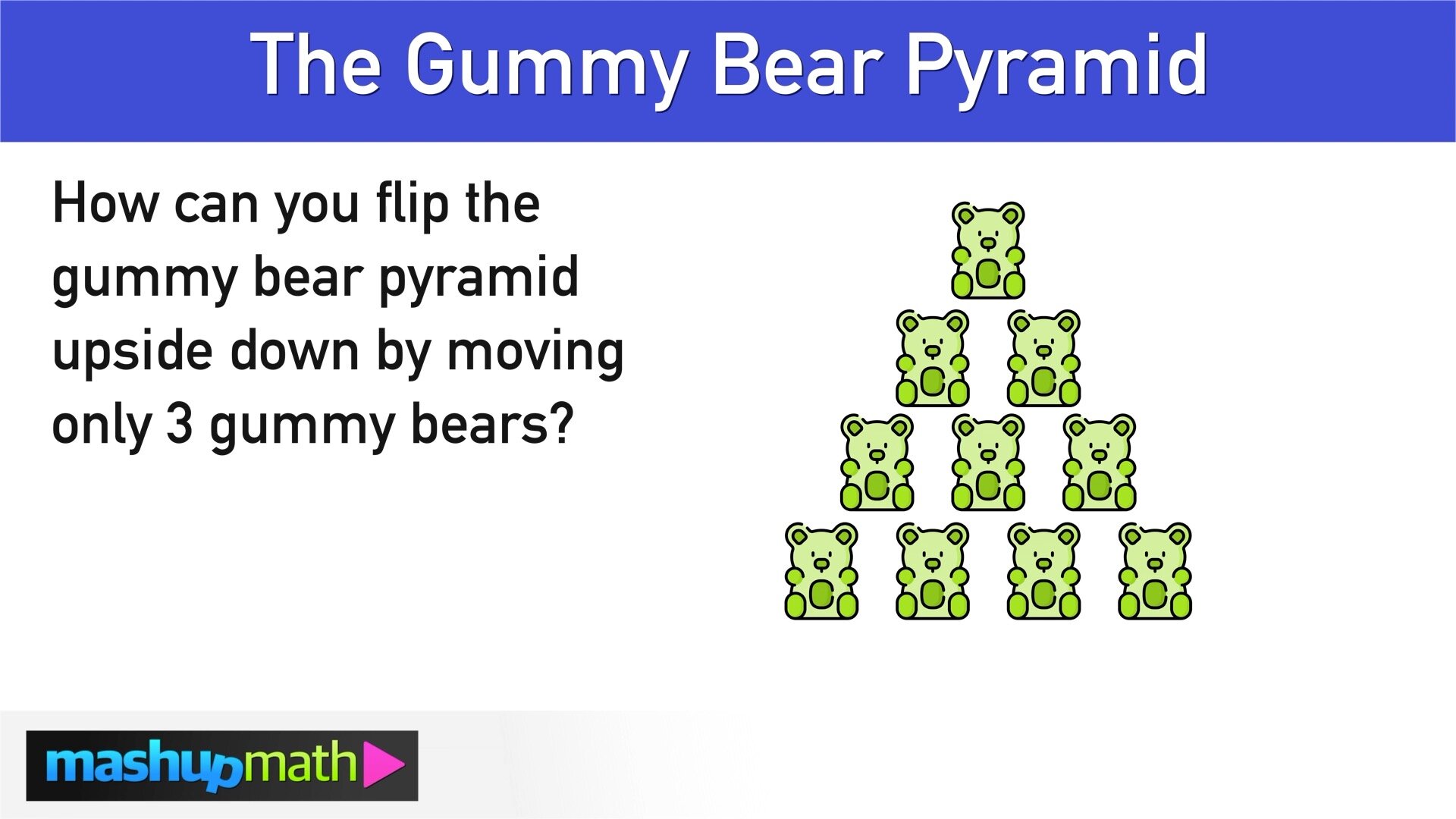
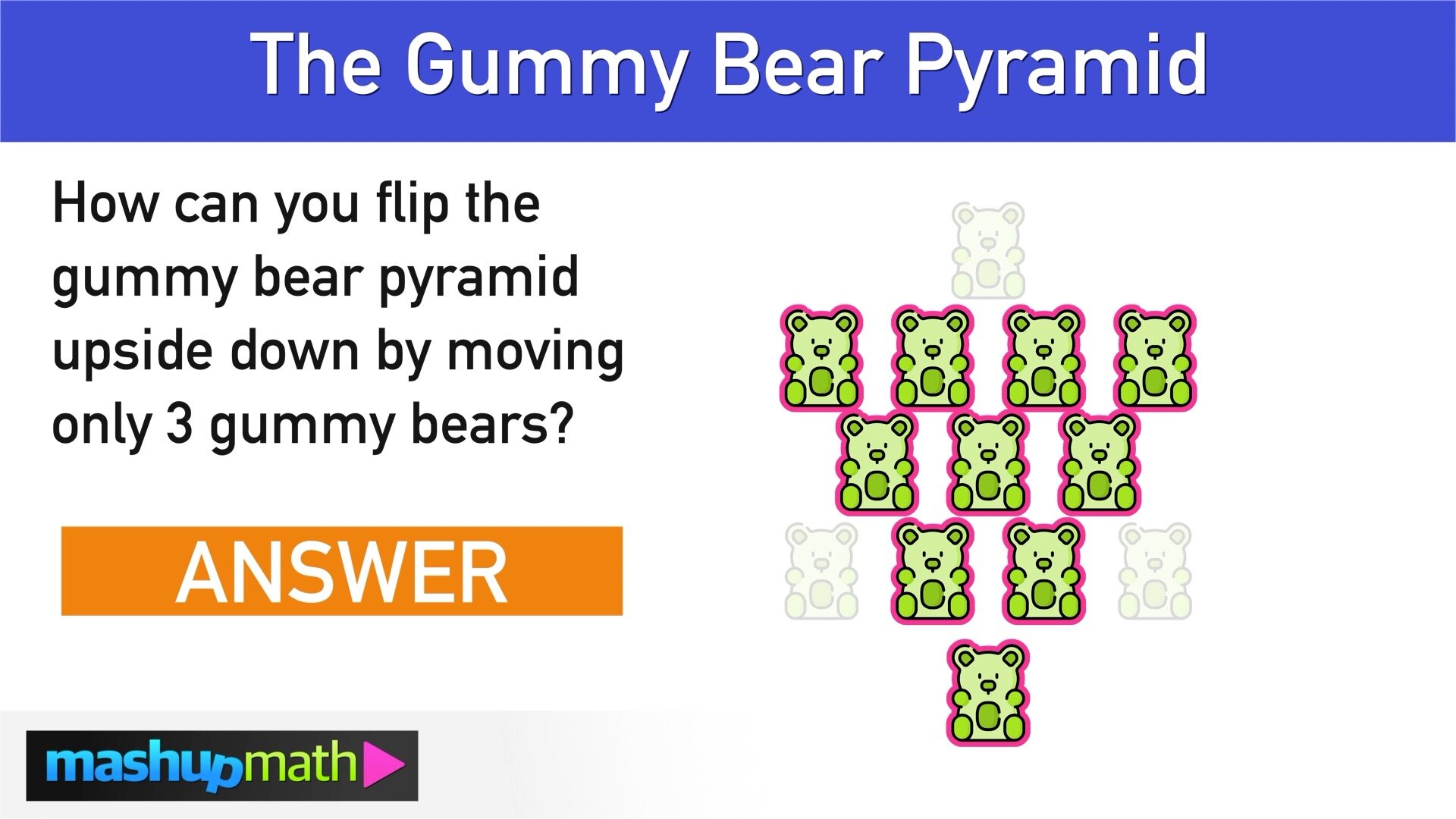
How can you flip the gummy bear pyramid upside down by moving only 3 gummy bears?

03.jpg

Keep reading to the bottom of this page to see the answer key AND click here to see the video that explains the solution to this problem.


Are you looking for more super fun Math Riddles, Puzzles, and Brain Teasers to share with your kids?

The best-selling workbook 101 Math Riddles, Puzzles, and Brain Teasers for Kids Ages 10+! is now available as a PDF download. You can get yours today by clicking here.

 
Get Yours Now
 

Logical Puzzle #4

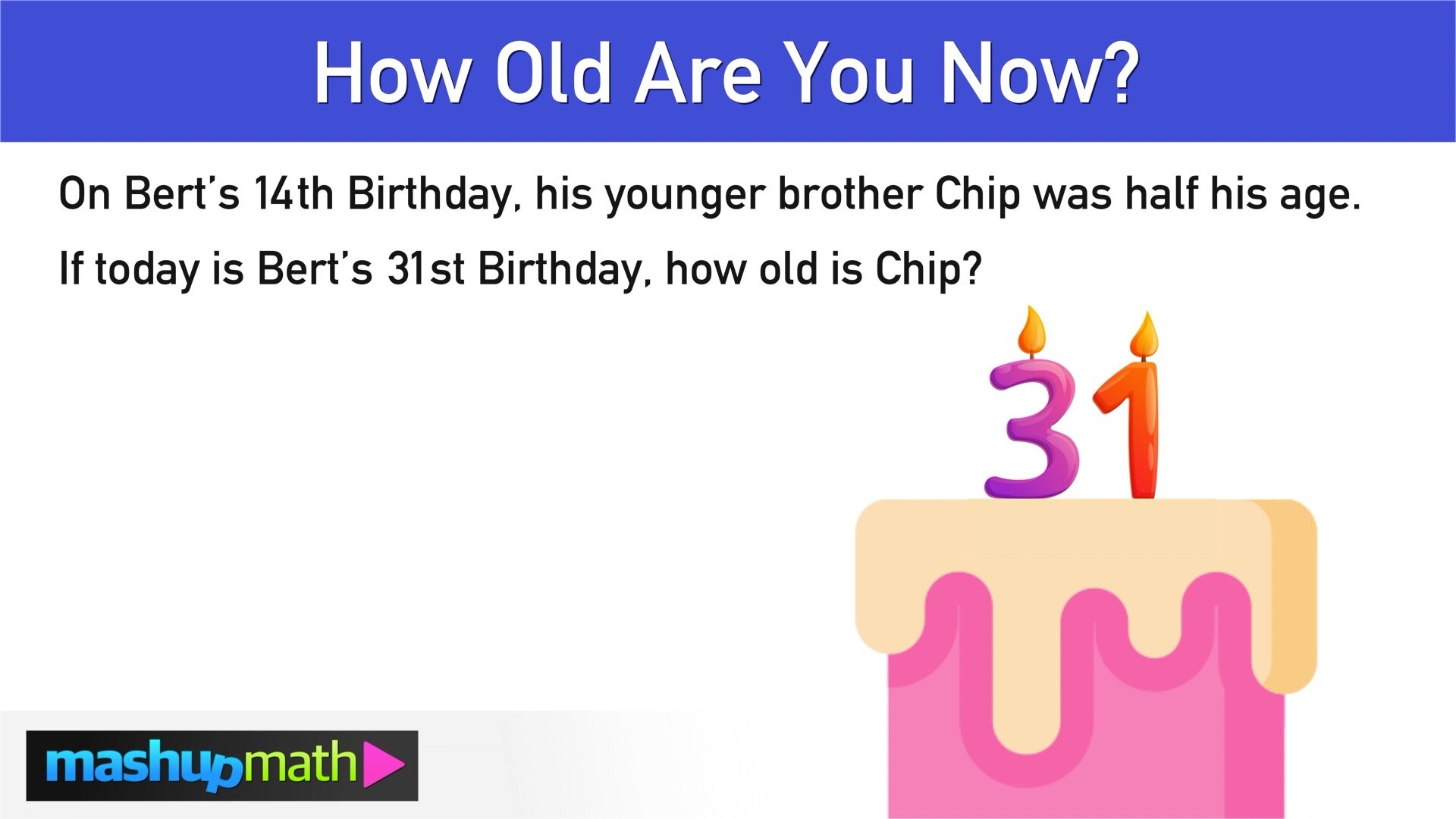
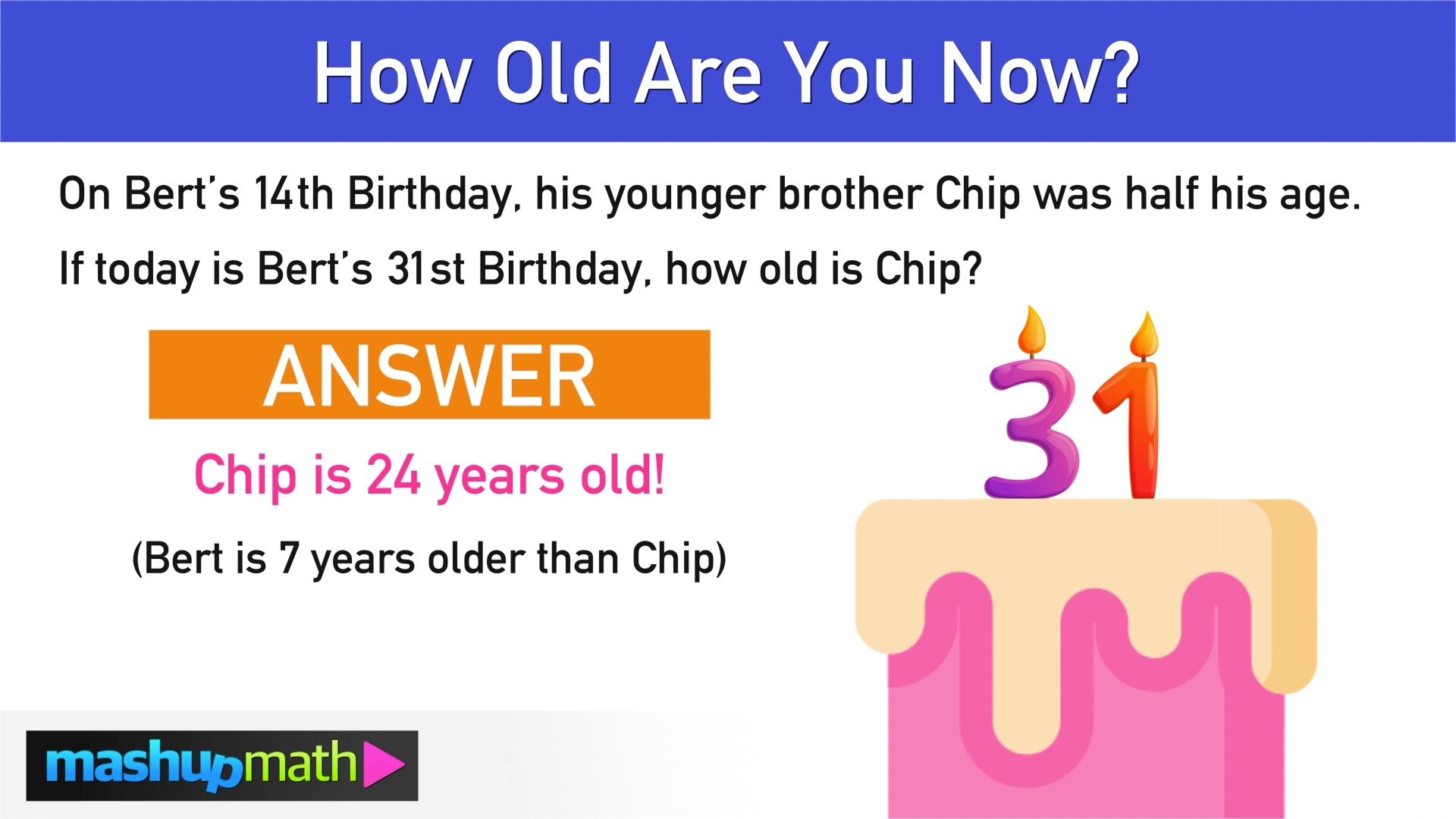
On Bert’s 14th Birthday, his younger brother Chip was half his age. If today is Bert’s 31st birthday, how old is Chip?

04.jpg

Keep reading to the bottom of this page to see the answer key AND click here to see the video that explains the solution to this problem.


Logical Puzzle #5

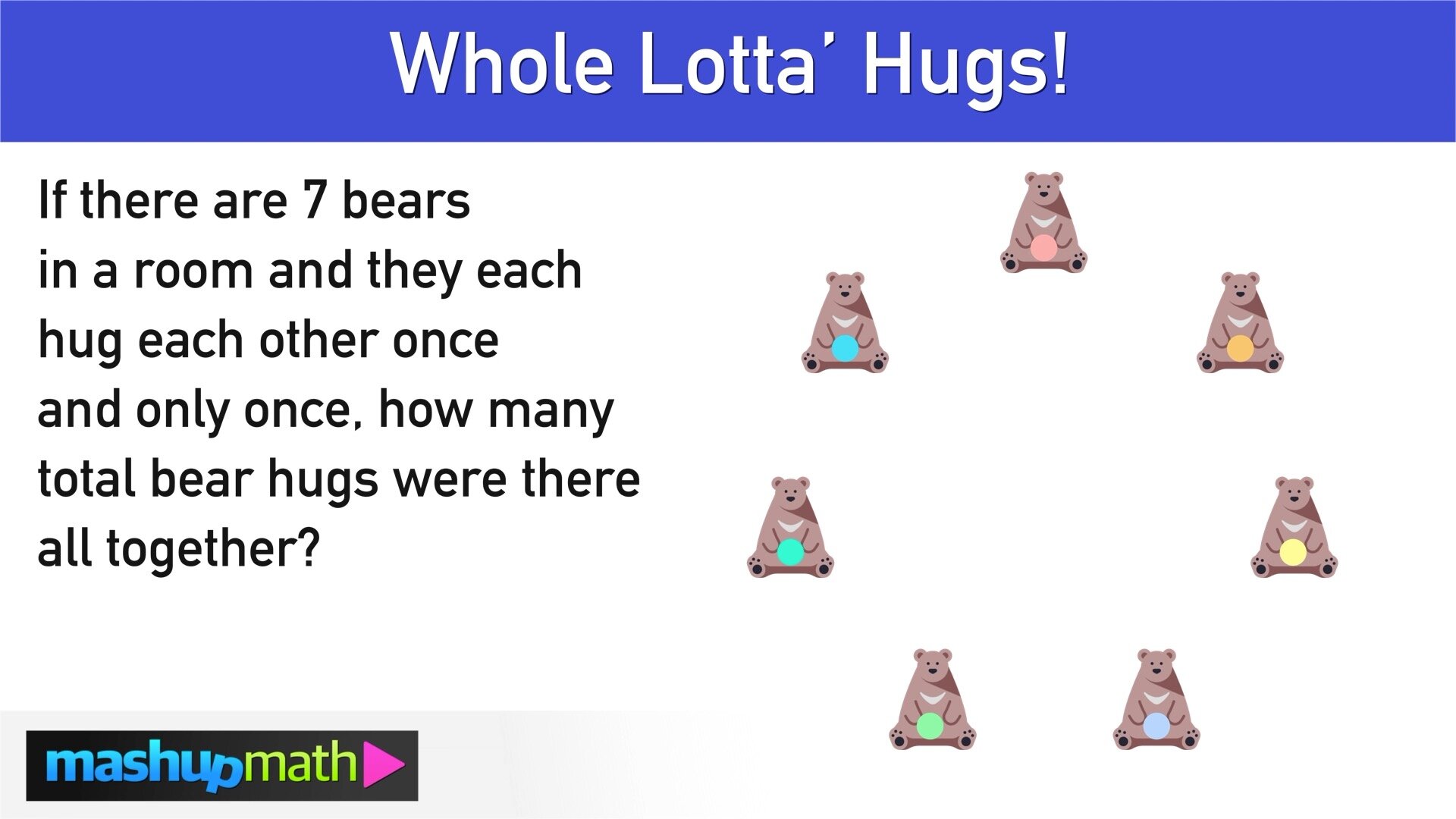
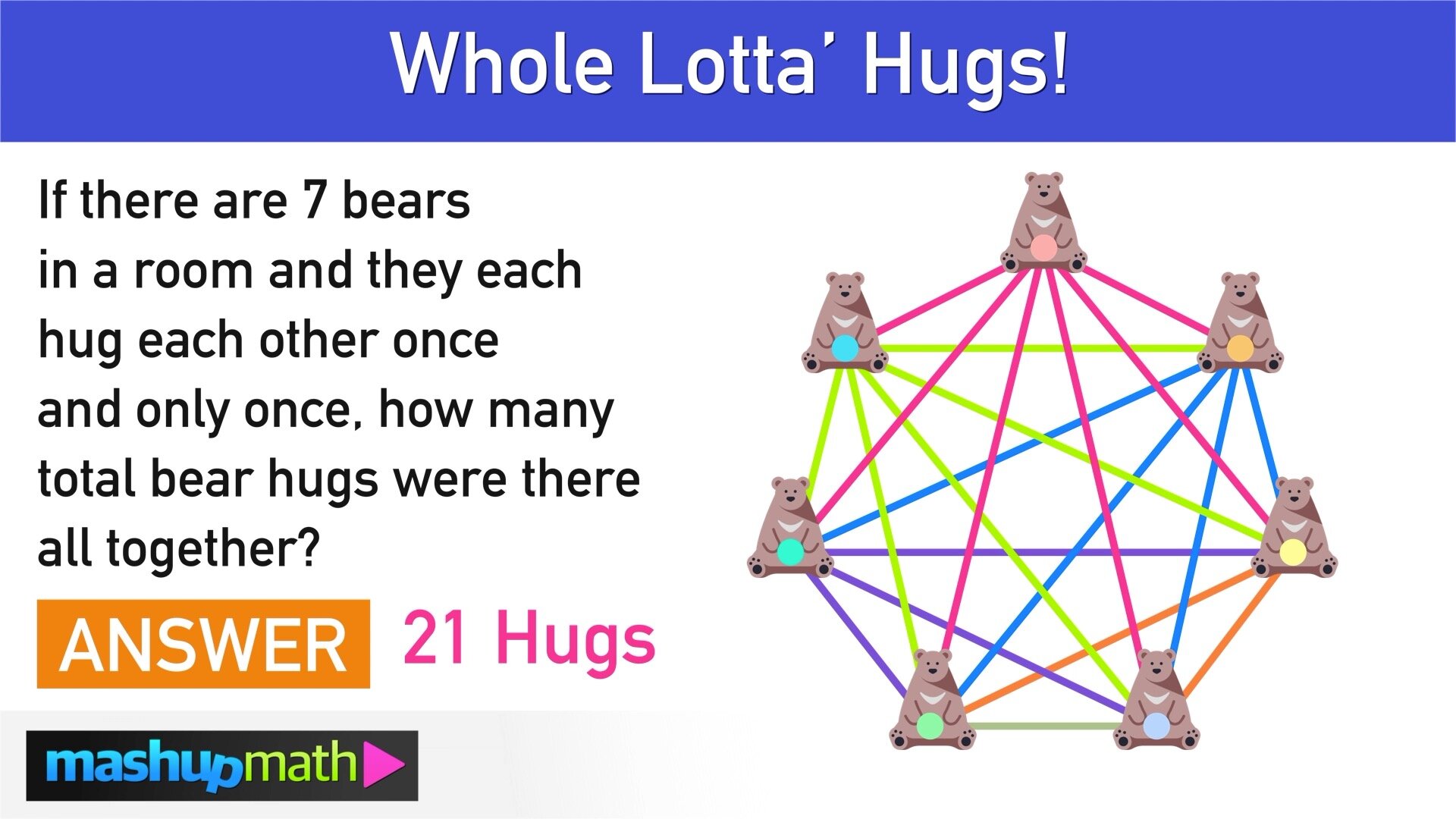
If there are 7 bears in a room and they each hug each other once and only once, how many total bear hugs were there altogether?

05.jpg

Keep reading to the bottom of this page to see the answer key AND click here to see the video that explains the solution to this problem.


Bonus Logical Puzzle!

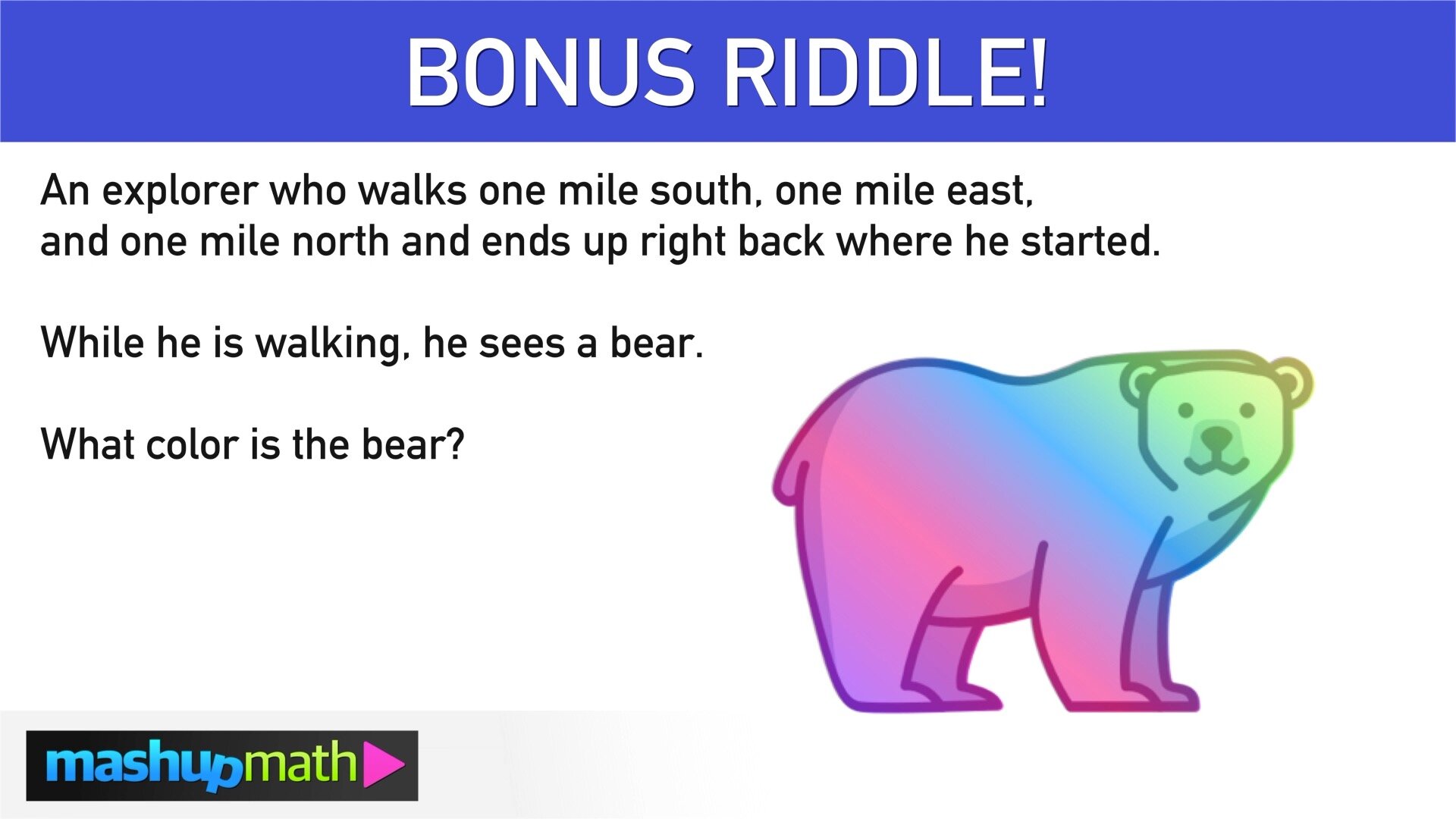
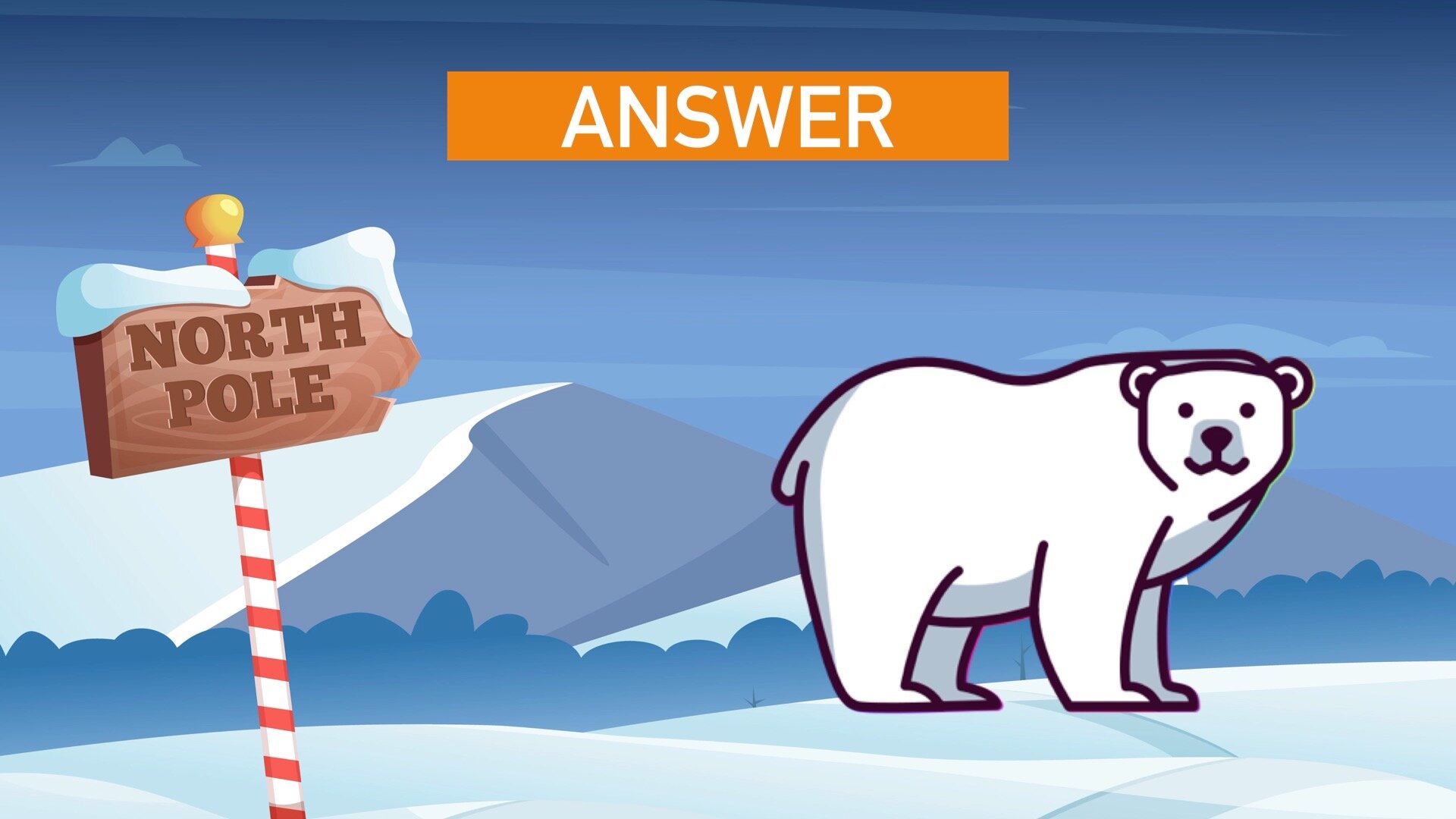
An explorer who walks one mile south, one mile east, and one mile north and ends up right back where he started. While he is walking, he sees a bear. What color is the bear?

bonus.jpg

Keep reading to the bottom of this page to see the answer key AND click here to see the video that explains the solution to this problem.


Ready for the answers?

Remember that there’s no rush to find the answers to today’s logic puzzles. It’s ok to wait to until you’ve found an answer to each problem before scrolling down to see the answers below.

ANSWER KEY:

1.) 11 Blocks

Answer01.jpg

2.) Half-Way (after that, the bear is walking out of the woods)

Answer02.jpg

3.) Diagram:

Answer03.jpg

4.) Chip is 24 years old

Answer04.jpg

5.) 21 Hugs

Answer05.jpg

Bonus: The Bear is White (Polar Bear at the North Pole)

BonusAnswer.jpg

Image: Mashup Math FP

Are you looking for more super fun Math Puzzles to share with your kids?

My best-selling workbook 101 Daily Math Challenges for Engaging Students in Grades 3-8 is now available as a PDF download. You can get yours today by clicking here.

Get More Math Puzzles

Did I miss your favorite math riddle for kids? Share your thoughts, questions, and suggestions in the comments section below!

(Never miss a Mashup Math blog--click here to get our weekly newsletter!)

By Anthony Persico

Anthony is the content crafter and head educator for YouTube's MashUp Math and an advisor to Amazon Education's 'With Math I Can' Campaign. You can often find me happily developing animated math lessons to share on my YouTube channel . Or spending way too much time at the gym or playing on my phone.
You Might Also Like…


3 Comments

11 Famous Women Mathematicians and Their Incredible Contributions!

3 Comments

11 Famous Women Mathematicians and Their Incredible Contributions!

Image: Mashup Math

Last Updated: October 10, 2024

March is Women’s History Month, a time to honor, celebrate, and acknowledge generations of women of all backgrounds, their struggle to achieve equality in society, and their incredible contributions in fields including civil rights, athletics, art, politics, mathematics, and every other facet of life imaginable.

Women’s History Month is a special opportunity for students to learn about famous women mathematicians throughout history and their contributions to the field of study—ranging from discovering fundamental theorems to rocket science and putting astronauts into orbit.

Why is it important for students to learn about female mathematicians? Because the History of Mathematics is overly focused on the contributions of a small group of male mathematicians like Isaac Newton, Albert Einstein, and Euclid, while often ignoring the diverse contributions of women and minorities

If you are looking to promote gender equality and celebrate Women’s History Month with your kids this month and beyond, sharing the contributions of famous female mathematicians is a great way to inspire students, teach them about the history of mathematics, and remind them that math is accessible to everyone.

In February, we celebrated Black History Month by sharing 11 Famous African American Mathematicians You Should Know About. And now that the calendar has turned to March, we are sharing 11 Famous Women Mathematicians and Their Amazing Contributions in honor of Women’s History Month.

One idea for celebrating these famous women is to focus on a different individual each day, assigning individuals for a famous woman mathematician research assignment, or by sharing this article on your classroom’s bulletin board.

Note that you can certainly share this list of famous female mathematicians with your kids during any time of the school year. However, March, being Women’s History Month, is an extra special opportunity to provide your students with a deeper understanding of these women and their contributions within the context of history and the fight for gender equality.

11 Famous Female Mathematicians and Their Incredible Contributions


Famous Female Mathematicians: Hypatia (Image: Mashup Math MJ)

1.) Hypatia (370-415 AD)

There was a woman in Alexandria named Hypatia, daughter of the Philosopher Theon, who made such attainments in literature and science, as to far surpass all the philosophies of her own time.

-Socrates Scholasticus

Our list starts off with Hypatia, the daughter of prominent Egyptian Mathematician Theon with whom she collaborated on several famous mathematical works. Since Hypatia was the daughter of an upper-class mathematician and philosopher, she received the same education as her male peers and it wasn’t long before she proved that she was a more accomplished mathematician than many, including even her father.

Conic Sections

Conic Sections (Image: Wikipedia Commons)

She is considered the first known female math teacher in history and was also known for teaching astronomy and how to use an astrolabe device to model astronomical events.

In addition to becoming a respected teacher of mathematics (which was unheard of for a woman in Egypt at the time), she also made several advancements to the field of mathematics, namely her work on conic sections and developing the concepts of ellipses, parabolas, and ellipses by dividing cones into planes.


Famous Female Mathematicians: Sophie Germain (Image: Mashup Math MJ)

2.) Sophie Germain (1776-1831)

Algebra is but written geometry, and geometry is but figured algebra.

-Sophia Germain

Sophie Germain was born in Paris, France in 1776 and become infatuated with mathematics at a young age. As a teenager, she spent her time reading every mathematics book available in her library and taught herself Latin so she could study the works of Isaac Newton and Euler.

At the age of 18, she enrolled in the famous math academy École Polytechnique, which was no easy feat for a woman at that time. To get her professor’s attention, she submitted letters sharing her mathematical work using a fake male student’s name. After discovering that the work was actually done by Sophie, her professor was extremely impressed and became her mentor, helping her to establish herself and become respected in a male-dominated field of mathematics.

Her two greatest mathematical accomplishments include contributing to Fermat’s Last Theorem, paving the way for the problem to be solved several centuries later and pioneering what is known as elastic theory, which led her to becoming the first female to be honored by the Paris Academy of Sciences


Famous Female Mathematicians: Ada Lovelace (Image: Mashup Math MJ)

3.) Ada Lovelace (1815-1852)

The more I study, the more insatiable do I feel my genius for it to be.

-Ada Lovelace

Ada Lovelace was an English Mathematician who is regarded as the world’s first computer programmer!

In 1836, she wrote the world’s first computer program known as an algorithm for an Analytical Engine to compute Bernoulli numbers.

In 1852, Lovelace died due to an illness at only 37 years old. However, despite her short life, she made significant contributions to the fields of mathematics and computer science that can still be seen to this day. She is still regarded as the first person to understand the potential of a computing machine.

Without the contributions of Ada Lovelace, the modern computer and associated algorithms that we take for granted may not exist.


Famous Female Mathematicians: Sofia Kovalevskaya (Image: Mashup Math MJ)

4.) Sofia Kovalevskaya (1850-1891)

It is impossible to be a mathematician without being a poet in soul.

-Sofia Kovalevskaya

Sofia Kovalevskaya is yet another incredible and inspiring female mathematician who overcame the gender biases of her time to make significant contributions to the field of mathematics.

After demonstrating her ability to perform advanced mathematics at a young age, Sofia began attending classes at the University of Heidelberg only after receiving special permission since she was not a boy.

Sofía-Kovalevskaya-smithsonianmag.jpg
1378.jpg

Image: Mashup Math FP

Sofia would struggle for most of her adult life to gain the same privileges to study and teach mathematics as her male counterparts did. Despite this struggle, she would become a highly regarded math professor and was the first woman to receive a doctorate in mathematics and the first woman in Europe to become a full-time professor.

Her greatest contribution to the field of mathematics was in her studies of differential equations and elliptic integrals, namely in relation to understanding the workings of Saturn and its rings.


Famous Female Mathematicians: Emmy Noether (Image: Mashup Math MJ)

5.) Emmy Noether (1882-1935)

My methods are really methods of working and thinking, this is why they have crept in everywhere anonymously.

-Emmy Noether

Emmy Noether was born in Germany and is arguably the most influential women mathematician in history.

After initially being reluctant to study mathematics at a young age, she eventually joined her father and brother, who were both mathematicians as well, and enrolled in a doctoral program at the University of Erlangen in Germany.

Noether is best known for discovering Noether’s Theorem, which links mathematics and physics in an extremely important way. The theorem, which is named after her, relates the laws of nature and conservation to mathematical symmetry and how we understand the universe.

Noether’s Theorem: States that every differentiable symmetry of the action of a physical system has a corresponding conservation law. (via wikipedia.org)

At the time, her theory was truly groundbreaking and influenced in how mathematicians and scientists thought about and understood the workings of our universe.

In addition to Noether’s Theorem, she made major contributions to the fields of theoretical physics and abstract algebra.

In fact, Albert Einstein dubbed her as “the most significant mathematical genius thus far produced since the higher education of women began.”


Famous Female Mathematicians: Dorothy Vaughn (Image: Mashup Math MJ)

6.) Dorothy Vaughn (1910-2008)

I changed what I could, and what I couldn’t, I endured.

-Dorothy Vaughn

Dorothy Vaughn is known for being a respected high school math teacher turned “human supercomputer” for NASA.

Vaughn worked on a racially segregated team of computer programmers assigned with using supercomputers to perform computations associated with NASA space launches, including sending astronaut John Glenn into orbit in 1962.

spacex-OHOU-5UVIYQ-unsplash.jpg

Photo by SpaceX on Unsplash

She is a main character in the hit film Hidden Figures and was the first African American female supervisor at NASA. She went on to play a key role in NASA’s use of supercomputers to assist in aeronautical projects and space launches.


Famous Female Mathematicians: Katherine Johnson (Image: Mashup Math MJ)

7.) Katherine Johnson (1918-2020)

Girls are capable of doing everything men are capable of doing. Sometimes they have more imagination than men.

-Katherine Johnson

Johnson was another main character in the critically acclaimed film Hidden Figures. She made major contributions in the fields of orbital and aeronautics mechanics, which were critical to the successful launch of Astronaut John Glenn into orbit by the United States in 1962.


Katherine Johnson was awarded the Presidential Medal of Freedom in 2015. (Image: Public Domain)


Katherine Johnson spent 35 years working for NASA and developed a reputation for being a master at performing difficult and complex calculations. She went on to help pioneer the use of computer science and programming to do complex math calculations for NASA.

In 2015, President Barack Obama awarded Johnson the Presidential Medal of Freedom.


Famous Female Mathematicians: Julia Robinson (Image: Mashup Math MJ)

8.) Julia Robinson (1919-1985)

I like to think of mathematicians as forming a nation or our own without distinctions of geographical origin, race, creed, sex, age, or even time…all dedicated to the most beautiful of the arts and sciences.

-Julia Robinson

Robinson, an American mathematician, started off as a young math prodigy by completing grades 5 through 8 in one single year after missing two full years of school due to a serious illness.

After spending decades working on Hilbert’s tenth problem, which was widely considered unsolvable by the mathematics community, she and a small team found a solution in 1980—a groundbreaking achievement!

She also made significant contributions to the fields of game theory and computability theory.


Famous Female Mathematicians: Valerie Thomas (Image: Mashup Math MJ)

9.) Valerie Thomas (1943-Present)

Figuring out what you want comes from failing, and then trying again. It comes from questioning everything, falling in love, fighting the power, living without limits. It doesn't come from getting straight A’s, playing by the rules, and listening obediently.

-Valerie Thomas

Valerie Thomas is a distinguished scientist and is best known for inventing the Illusion Transmitter—a 3-Dimensional Imaging Technology that was the first of its kind when it debuted in 1980. In fact, this technology is the basis for modern 3D imaging tech that we see in modern televisions, video games, and movies!

Additionally, Valerie Thomas works as a developer and engineer for NASA from 1964 to 1995. During her career at NASA, she managed a team that facilitated the reception of the first satellite images to be received from outer space.


At the time of this writing, Thomas holds a role at the Science and Mathematics Aerospace Research and Technology and National Technical Association as a youth mentor and encourages young people of all genders and backgrounds to pursue science and mathematics.


Famous Female Mathematicians: Maryam Mirzakhani (Image: Mashup Math MJ)

10.) Maryam Mirzakhani (1977-2017)

The beauty of mathematics only shows itself to more patient followers.

-Maryam Mirzakhani

Maryam Mirzakhani was an Iranian mathematician and math professor at Stanford University. In high school, Mirzakhani and her best friend became the first Iranian women to qualify for the Mathematical Olympiad.

She made significant contributions to researching math topics including theoretical mathematics, hyperbolic geometry, and ergodic theory.

Her work eventually led her to become the first Iranian woman to win the Fields Medal in 2014, which is the most prestigious mathematics award one can receive.

Sadly, Mirzakhani died of cancer complications in 2017 at the age of 40.


“I always look forward to getting my Mashup Math newsletter email every week. I love the free activities!” -Christina R., 5th Grade Math Teacher, Dallas, TX

Do YOU want free math resources, lesson activities, and puzzles and games for grades 1-8 in your inbox every week? Join our mailing list and start getting tons of free stuff!

 
Sign-Up for Free
 

Famous Female Mathematicians: Mae Carol Jemison

11.) Mae Carol Jemison (1956-Present)

Never limit yourself because of others' limited imagination; never limit others because of your own limited imagination.

-Mae Carol Jemison

Mae Carol Jemison is an incredibly talented and inspirational figure. As a decorated engineer, physician, mathematician, and NASA astronaut, she is best known for becoming the first African American woman to go to outer space, which happened when she was a member of the Endeavour Space Shuttle that launched into orbit in 1992.

Before becoming an astronaut, Jemison served in the Peace Corps as a general practice physician.

Today, she serves on the council for the Science Matters initiative, with the goal of encouraging children to pursue STEM careers at a young age.


More Math-Related Posts You Will Love:


How are you planning on celebrating Black History Month in YOUR classroom? Share your thoughts and suggestions in the comments section below!

(Never miss a Mashup Math blog--click here to get our weekly newsletter!)

By Anthony Persico

Anthony is the content crafter and head educator for YouTube's MashUp Math and an advisor to Amazon Education's 'With Math I Can' Campaign. You can often find me happily developing animated math lessons to share on my YouTube channel . Or spending way too much time at the gym or playing on my phone.
3 Comments

Free St. Patrick's Day Math Activities for Grades K-8

1 Comment

Free St. Patrick's Day Math Activities for Grades K-8

StPatricksMath.jpg

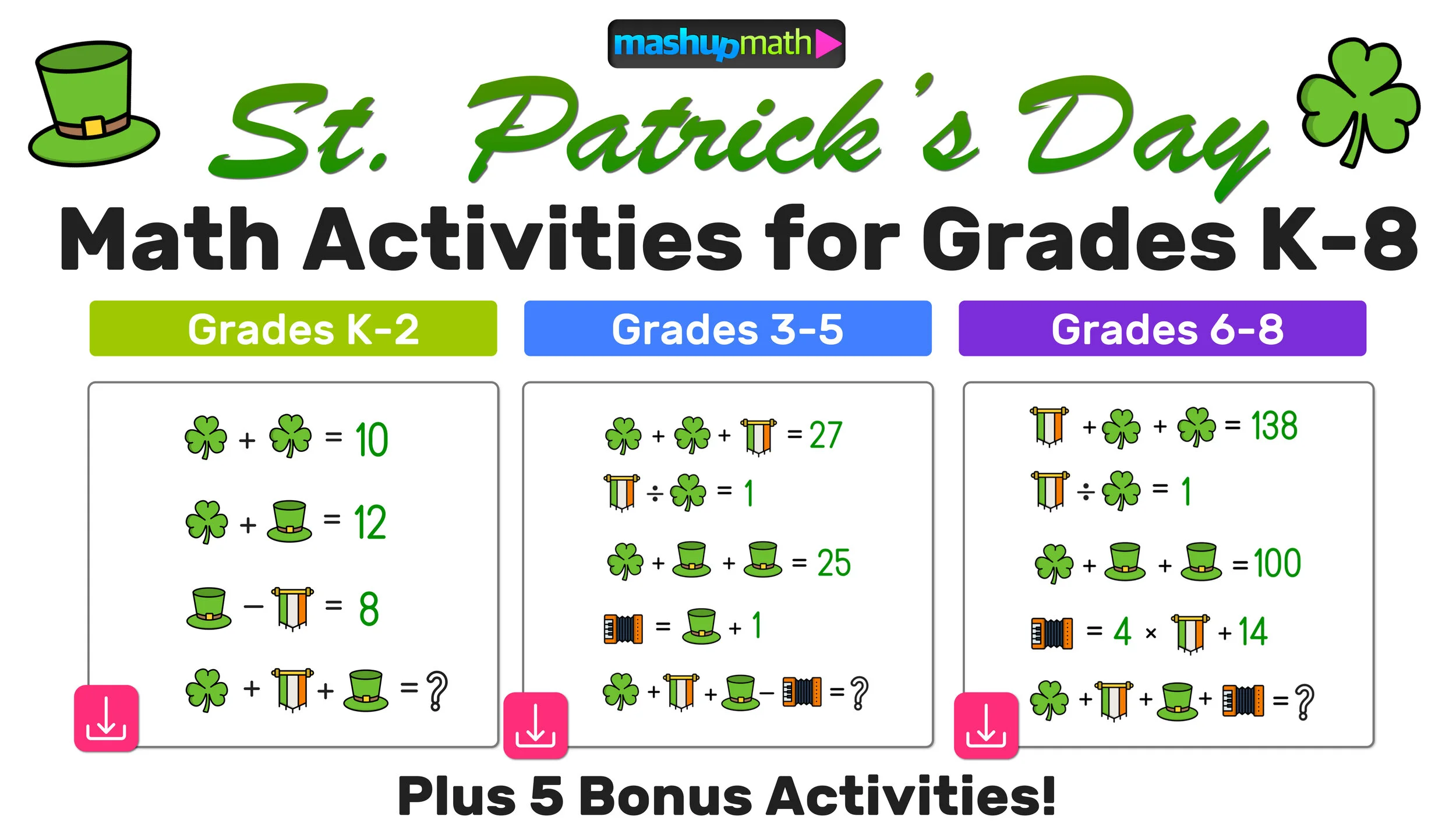
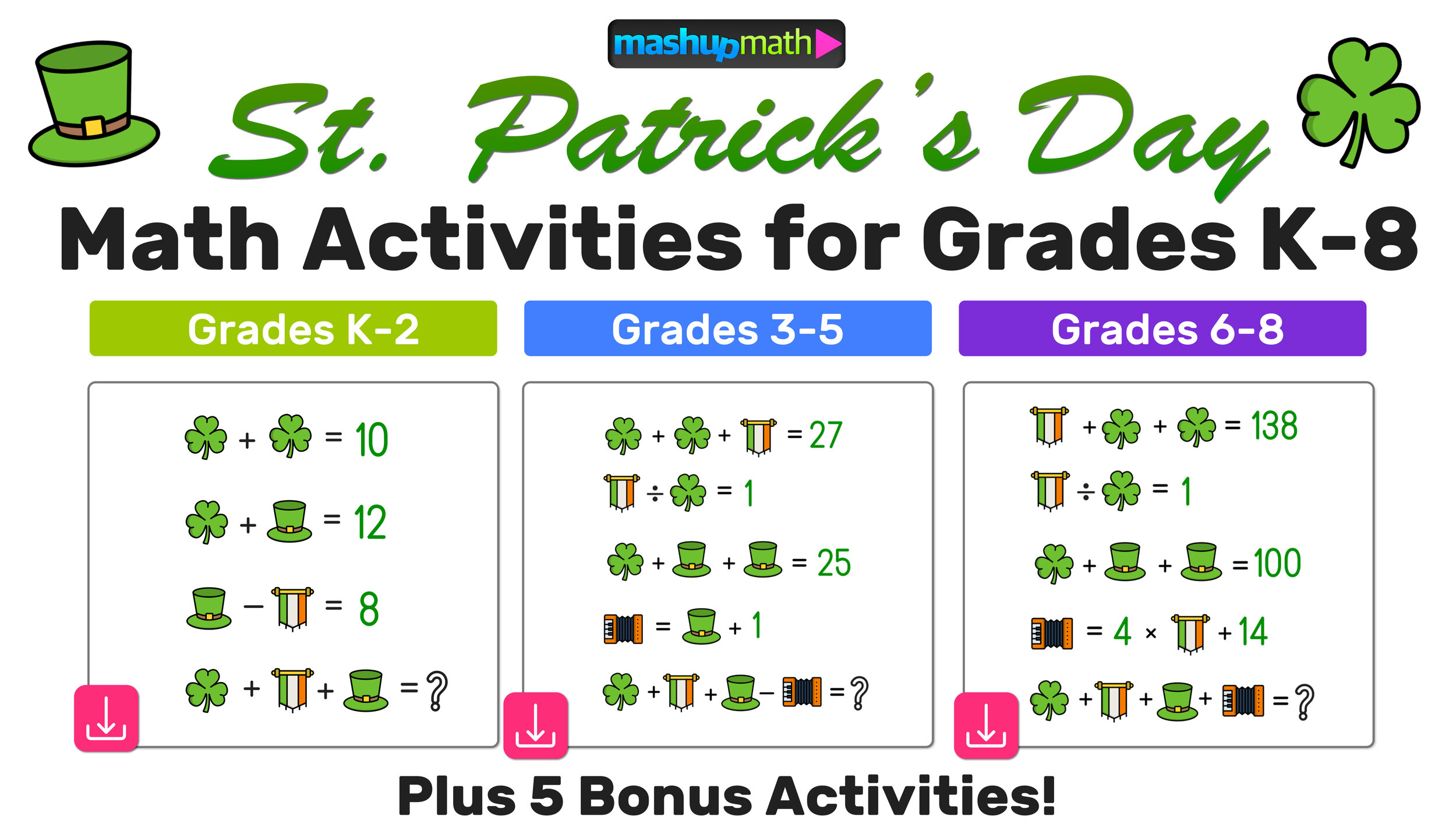
Are you looking for fun, free, and printable St. Patrick’s Day Math Worksheets and Activities to share with your students at home and in your classroom this March?

Sharing engaging holiday-themed math activities will give your students an opportunity to apply their math skills and develop their critical thinking while working through interesting puzzles and worksheets that capture their enthusiasm for significant dates such as St. Patrick’s Day.

If you want to channel your students’ enthusiasm for St. Patrick’s Day into meaningful learning experiences and watch their interest, engagement, and participation skyrocket, go ahead and share the following Free St. Patrick’s Day Math Worksheets and St. Patrick’s Day Math Activities in your upcoming lesson plans.

Each worksheet can be used as a warm-up/anticipatory set or cool-down activity as well as a key component to any math lesson for grades K-8. Full answer keys for each activity are included.

Tags: St. Patrick’s Day, Math Activities, Math Puzzles, Math Worksheets, Kindergarten, 1st Grade, 2nd Grade, 3rd Grade, 4th Grade, 5th Grade, 6th Grade, 7th Grade, 8th Grade, Homeschool, Homeschooling

How to Download: You can download any of the puzzles by right-clicking on the image and saving it to your computer or by dragging-and-dropping it to your desktop.


1.) Find the value of the '?' (for Grades K-2)

Use your math skills to find the value of each icon.

Shamrock=5

Hat=7

Flag=1

?=13

Do you want access to hundreds of grade-specific holiday math activities for every month of the year? Become a Mashup Math member and access all of our K-8 math activity libraries. Start your free 7-day trial.

StPatrick_K12 copy.jpg

2.) Find the value of the '?' (for Grades 3-5)

Use your math skills to find the value of each icon.

Clover=9

Irish Flag=9

Hat=8

Accordion=9

?=17

Do you want access to hundreds of grade-specific holiday math activities for every month of the year? Become a Mashup Math member and access all of our K-8 math activity libraries. Start your free 7-day trial.

StPatricks_345 copy.jpg

3.) Find the value of the '?' (for Grades 6-8)

Use your math skills to find the value of each icon.

Clover=46

Irish Flag=46

Hat=27

Accordion=198

?=317

Do you want access to hundreds of grade-specific holiday math activities for every month of the year? Become a Mashup Math member and access all of our K-8 math activity libraries. Start your free 7-day trial.

StPatricksDay_678 copy.jpg

Bonus St. Patrick’s Day Math Activities

Here are 5 more bonus St. Patrick’s Day math activities for kids:

MultTable.jpg

1.) Multiplication tables work like a Bingo board, where the value of each box represents the product of its corresponding row and column.

Rainbow = 0

Green Hat = 1

Leprechaun = 2

Heart = 4

Pot of Gold = 0

Shamrock = 5

Looking for more free math challenges like this one to share with your kids? click here


2.) Multiplication Area Model

Area models help kids to think visually about multiplication, which is the approach that Mathematical Mindsets author Jo Boaler recommends most for improving math understanding.

Balloons = 10

Shoe = 6

Leprechaun = 60

Shamrock = 30

Looking for more free math challenges like this one to share with your kids? click here

AreaModel.jpg

Are you looking for more daily math challenges and puzzles to share with your kids?

My best-selling workbook 101 Math Challenges for Engaging Your Students is now available as a PDF download. You can get yours today by clicking here.

 
WebPlug.jpg
Get Your Download
 

WODB.jpg

3.) Which One Doesn't Belong? (simple)

Which One Doesn’t Belong? (WODB) activities are meant to spark mathematical thinking and discussion and do not have a single correct answer.

Want to learn more about how to use WOBD? math activities with your kids? click here

Tip: Have your kids justify their thinking in writing!


Are you looking for more daily WODB? math graphics?

You can now share 101 daily WODB warm-up activities for grades 1-9 with your kids with our PDF workbook!

 
BookPlug-1.jpg
GET YOUR DOWNLOAD
 

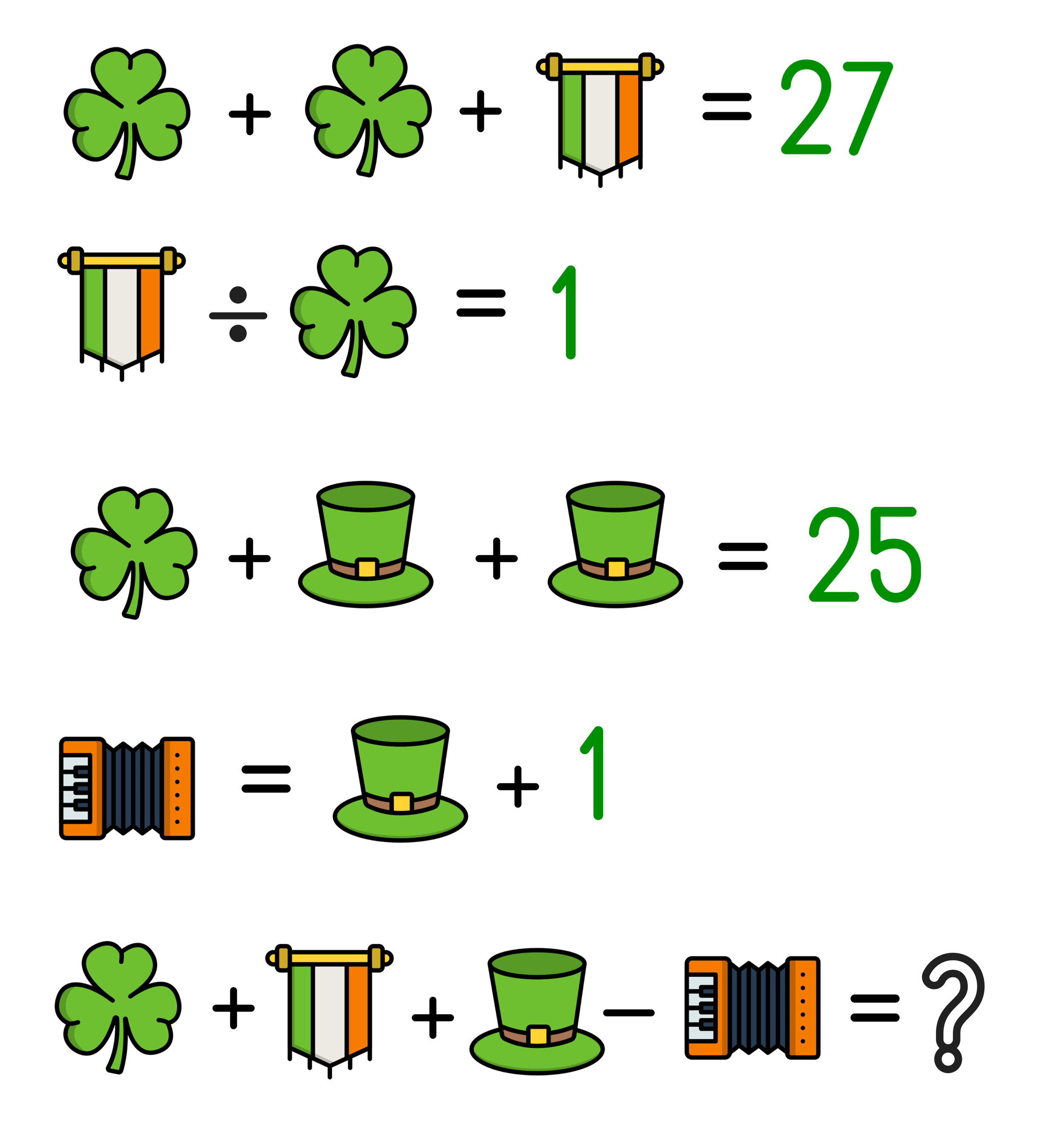
Challenge.jpg

4.) Bonus St. Patricks’s Day Puzzle

Use your knowledge of the order of operations to find the value of each symbol and the ‘?’ in the puzzle.

Top Hat = 3

Pot of Gold = 9

Teddy Bear = 5

Irish Flag = 4

? = 21


5.) Math Writing Prompt

Writing about math encourages creativity, exploration, and communicating one's thoughts and feelings, which leads to deep and meaningful understanding of difficult math concepts.

And Think/Notice/Wonder (TNW) writing activities are a great way to get your kids engaged in math writing every day.

Want to learn more about how to use TNW math activities with your kids? click here


Bonus! St. Patrick’s Day Math Riddle

In a far away land on the other side of the rainbow, there lives unicorns, centaurs, and leprechauns.

In total, there are 22 heads and 72 feet. If the number of unicorns is equal to the number of centaurs, how many unicorns, centaurs, and leprechauns live beyond the rainbow?

Scene2.jpg

Key: 7 unicorns , 7 centaurs , 8 leprechauns


How will you use these math puzzles with your kids? Share your thoughts and suggestions in the comments section below!

(Never miss a Mashup Math blog--click here to get our weekly newsletter!)

By Anthony Persico

NewBlogImage.png

Anthony is the content crafter and head educator for YouTube's MashUp Math and an advisor to Amazon Education's 'With Math I Can' Campaign. You can often find me happily developing animated math lessons to share on my YouTube channel . Or spending way too much time at the gym or playing on my phone.

 
StPatricksPin.jpg
 

1 Comment

10 National Pi Day Fun Facts You Need to Know!

3 Comments

10 National Pi Day Fun Facts You Need to Know!

10 National Pi Day Fun Facts

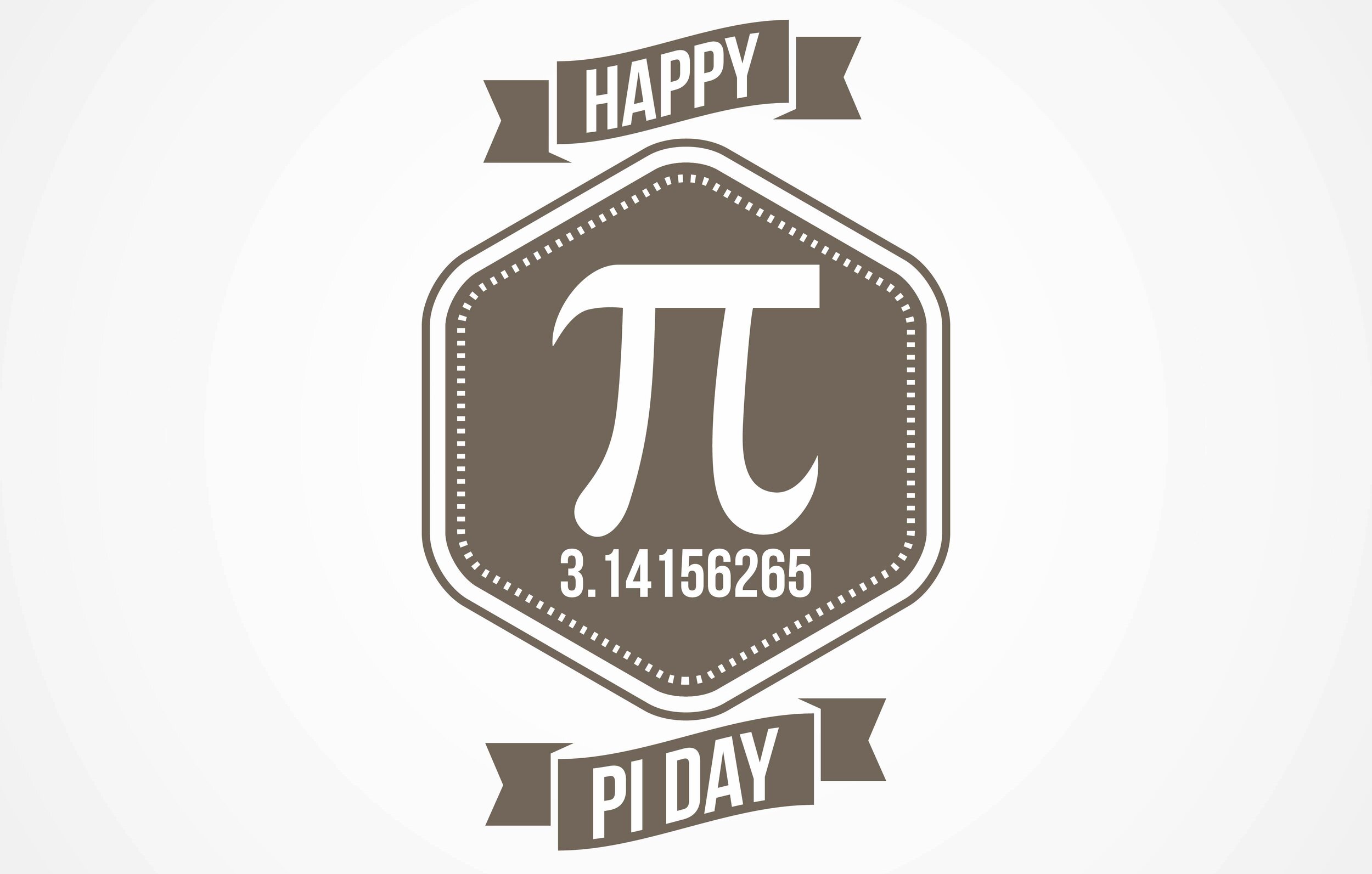
March 14th is National Pi Day—a time to celebrate the mathematical π Symbol, which represents the value 3.1415926535897932384626433832…, but is often approximated to 3.14, which is why 3/14 is the date of National Pi Day every year.

You can celebrate at home and in the classroom by learning some awesome Pi Day fun facts that everyone should know!

1332.jpg

Source: Mashup Math FP

Pi (π) represents the ratio of the circumference of any circle to its diameter. This groundbreaking mathematical fact is learned by all math students and is a fundamental math fact related to circles and cyclic relationships.

(Note that Pi Day should not be confused with Pi Approximation Day, which is celebrated on July 22nd since the fraction 22/7 is commonly used to approximate π since 22/7 = 3.142857143…)

There are many ways to celebrate National Pi Day, including snacking on circular-shaped foods like pizza and cookies, solving fun pi-themed math puzzles like the Which is More Pizza? brain teaser, and by learning some new fun facts about Pi and Pi Day.

For example, did you know that Albert Einstein’s birthday is on National Pi Day?

And if you want to learn more fun facts about Pi Day, check out our list of the 10 Most Interesting National Pi Day Fun Facts.

(Note that the following Pi Day Fun Facts are also featured on our 10 Pi Day Fun Facts YouTube video.

The Best National Pi Day Fun Facts


 1.) The History of Pi Day

When was the first Pi Day?

 The first National Pi Day was observed in 1988 by the American artist and physicist Larry Shaw in San Francisco by marching in circles with colleagues and snacking on different kinds of pie.

In 2009, the United States House of Representatives officially designated March 14th as National Pi Day and identified Shaw as the founder of the famous mathematical holiday.

Pi Day was first celebrated in San Francisco in 1988. (Photo by Daniel J. Schwarz on Unsplash)


2) What is π?

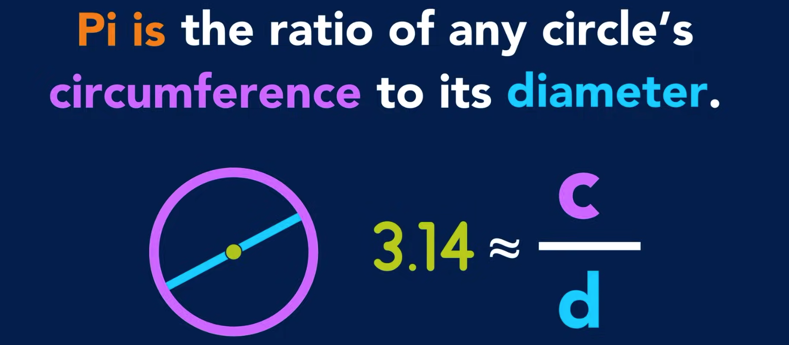
Pi (π) is the ratio of any circle’s circumference to its diameter.

The value of this ratio is approximately 3.14 and, yes, this relationship applies to any circle big or small.

 
Snip20210303_5.png
 

3.) Where did the Pi Symbol (π) come from?

 The π symbol that we use in math to represent pi was first used by the Swiss mathematician, physicist, and astronomer Leonard Euler in the year 1737.

Before Euler popularized using the Greek symbol π to represent the ratio of a circle’s circumference to its diameter, the value was known as Archimedes' constant.


Looking for more Pi Day activities?

Check out our super-popular Pi Day Fun Facts video on YouTube!


4.) How Long is Pi?

 The value 3.14 is used as an approximation for Pi since it is an irrational number that continues on and on forever, hence the “…”

π =3.1415926535897932384626433832795028841971693…

The current world record for memorizing the digits of pi is 67,890 consecutive digits set by Lu Chao in 2005.

Mathematicians estimate that it would take 133 years for a person to recite the 6.4 billion known digits of Pi without stopping!


5.) What is the earliest reference to Pi?

Even though the Greek symbol π wasn’t adopted until the 1700s, the earliest references to the constant ratio between any circle’s circumference and diameter occurred in Ancient Egypt around 1650 BCE.

Pretty cool, right?

Pi dates back to Ancient Egypt!

Pi dates back to Ancient Egypt! (Photo by Kévin et Laurianne Langlais on Unsplash)


6.) What is the most commonly occurring number in the first 100,000 decimal places of Pi?

The most common number in the first 100,000 decimal places of pi is the number 1, which occurs over 10,000 times!

 
Snip20210303_7.png
 

image-asset.jpg

Looking for more Pi Day activities?

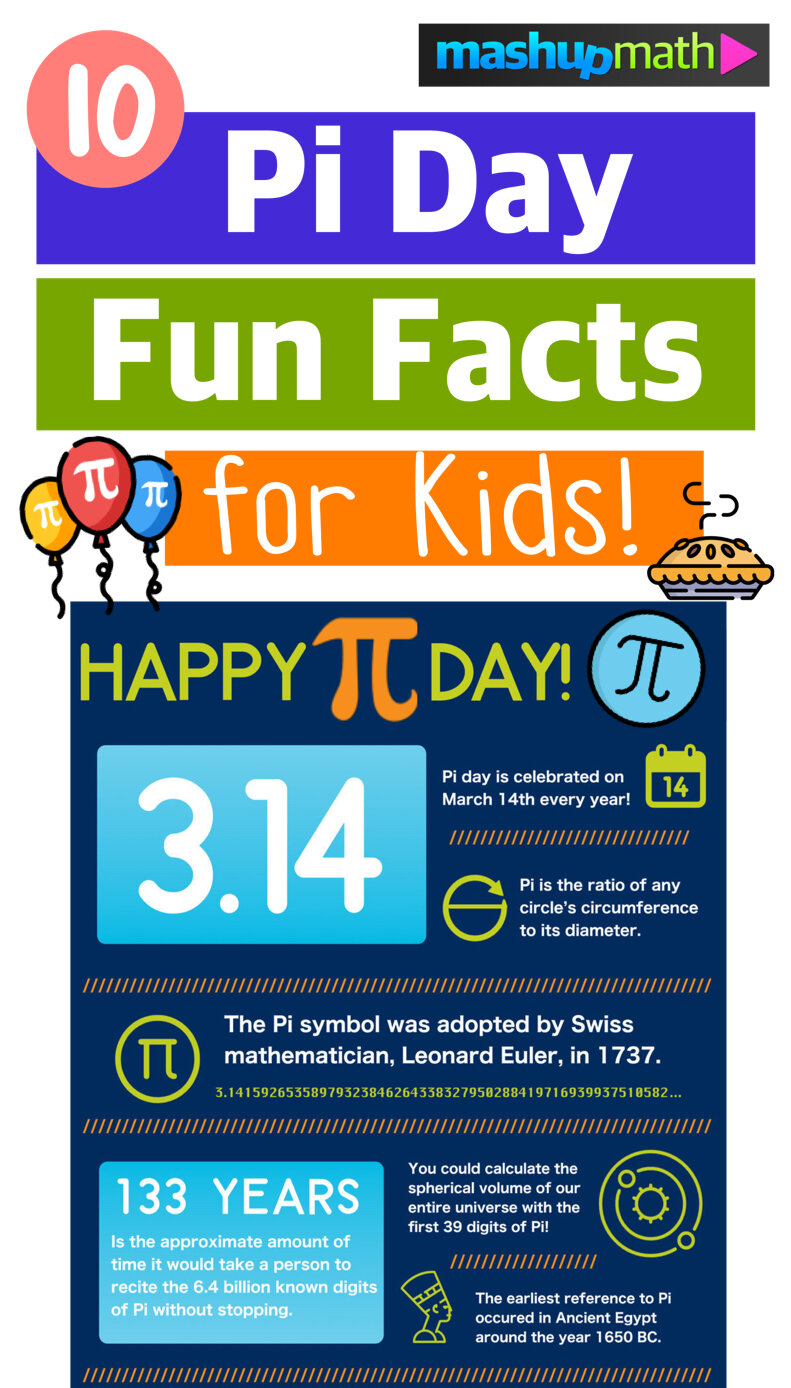
Get your free Pi Day Fun Facts infographic!

(Perfect to share with students on March 14th!)


7.) Are there any famous Pi Day birthdays?

There are several famous people born on March 14th, Pi Day, including Albert Einstein, NBA All-Star Steph Curry, Actors Billy Crystal and Michael Caine, and Olympic Gold Medalist Simone Biles.


Source: Mashup Math MJ

8.)   Who discovered the greatest number of digits of Pi?

Mathematician and computer scientist Fabrice Bellard calculated 2.7 trillion decimal places of pi using just a typical desktop computer in 2010.

That’s a lot of digits!


9.)  How long is Pi?

As mentioned earlier, Pi is an irrational number and is thus infinite. In fact, it would take 12 billion digits of pi typed out using a normal-sized font to connect New York City and Kansas City.

And since pi goes on forever, it has enough digits to wrap around the entire world an infinite number of times!

Source: Mashup Math FP


10.) Is Pi present in nature?

You bet!

Pi can be used to measure circular natural events ranging from water ripples that emanate from a single point to finding the spherical volume of the entire universe (which can be done using only the first 39 digits of pi!)

Photo by Omar Gattis on Unsplash


11.) Bonus!  What about Pie Day?

 Even though Pi Day is a mathematical holiday, it’s hard to ignore the homophone that is PIE DAY.

 Many people celebrate Pi Day by eating pie and other circular-shaped foods.

 In fact, many pizzerias and bakeries offer special Pi Day deals and discounts on March 14th each year.

 And as for pies, Apple Pie is considered the most preferred flavor of pie amongst Americans, with Pumpkin Pie coming in second, and Pecan Pie in third.

hugo-aitken-PqYvDBwpXpU-unsplash.jpg

Photo by Hugo Aitken on Unsplash


(Never miss a Mashup Math blog--click here to get our weekly newsletter!)

By Anthony Persico

More Math-Related Posts and Resources You Will Love:

 
PiDayFunFacts.jpg

3 Comments